






It's Not Chaos, It's Compromise
If you think the progression of Wi-Fi standards is confusing, you're not wrong. But the jumble of letters and numbers isn't the result of engineers making things up as they go. It's the product of a careful, often contentious, balancing act. Two main
groups drive this process: the IEEE (Institute of Electrical and Electronics Engineers) writes the highly technical 802.11 standards, defining what's possible. Then, the Wi-Fi Alliance, a marketing consortium of tech companies, steps in to certify that products from different manufacturers actually work together. The name "Wi-Fi" itself is a brand created by the Alliance to make the technology consumer-friendly. This dual structure—one group for the technical rules, another for market-friendly interoperability—is the engine room of Wi-Fi's evolution, constantly weighing ideal performance against real-world cost and usability.
The Golden Rule: Never Leave an Old Device Behind
The single most important principle guiding Wi-Fi's development has been backward compatibility. From the moment 802.11b gained popularity in the early 2000s, engineers knew that stranding millions of existing devices would kill market adoption. This is why your brand-new Wi-Fi 7 router can still talk to a laptop from 2013. Each new standard had to accommodate the protocols of the past, even if it meant sacrificing some performance. For example, when 802.11g networks had to support older 802.11b devices, the entire network's performance could be slowed down. This created technical debt, forcing engineers to design complex workarounds. But without this commitment, Wi-Fi would have fragmented into incompatible islands of technology, and it never would have become the ubiquitous utility it is today.
The Unrelenting Chase for More Speed
For much of its history, the Wi-Fi story was a simple narrative: more speed. The jump from 802.11b (11 Mbps) to 802.11a/g (54 Mbps) was transformative. Then 802.11n (Wi-Fi 4) introduced MIMO technology, using multiple antennas to dramatically boost throughput and reliability. 802.11ac (Wi-Fi 5) pushed speeds into the gigabit-per-second range, a necessity for the rise of HD video streaming. But this quest for speed wasn't just about bigger numbers on a box. It was a direct response to how we were using the internet. The slow speeds of early Wi-Fi were fine for basic email and web browsing, but they buckled under the pressure of on-demand video, online gaming, and households with dozens of connected devices. Each new standard was a race to keep up with our ever-increasing appetite for data.
From Raw Speed to Smart Efficiency
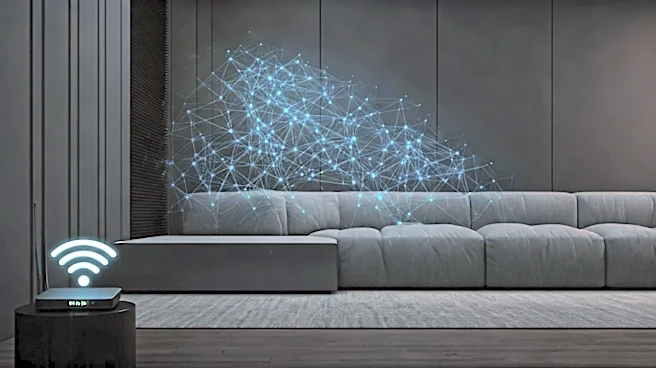
With 802.11ax (Wi-Fi 6), the design philosophy shifted. While still faster, the main goal was no longer just peak speed but efficiency in crowded environments. Think of early Wi-Fi as a single-lane road where cars (data packets) take turns. Wi-Fi 6 introduced OFDMA, a technology borrowed from the cellular world that acts like a multi-lane highway, allowing a router to talk to multiple devices simultaneously within the same channel. This is a game-changer for environments like coffee shops, airports, or a smart home filled with dozens of small, chatty IoT devices. Instead of every device shouting to be heard, the router can coordinate the conversation. This focus on managing congestion and reducing latency continued with Wi-Fi 7, which prioritizes reliability for applications like VR/AR and cloud gaming.
The Unseen Hand of the Market
Ultimately, technical specifications are only half the story. Commercial realities are the 'real reason' behind many design choices. The initial split between 802.11b (2.4 GHz) and 802.11a (5 GHz) is a perfect example. Though they came out at the same time, the 2.4 GHz 802.11b was cheaper to produce and became the consumer standard, despite the 5 GHz band being faster and less crowded. Cost, power consumption for battery-powered devices, and the physical size of antennas have always been powerful forces. A brilliant technical solution that makes a router too expensive or drains a phone's battery in an hour is a failure in the real world. The evolution of 802.11 is a masterclass in pragmatic engineering, where the 'best' technology is always the one that is good enough, affordable enough, and reliable enough to be adopted by billions.