






Black Friday is usually the season of deep discounts, but for PC gamers in 2026, the math just isn't adding up. A massive supply crunch is changing the rules of the game.
The Illusion of the Discount
If you are scrolling through retailer sites this week, you might see slashed prices
that look tempting at first glance. A 20 percent markdown on a high-end graphics card might catch your eye, but there is a catch: the starting price is already inflated. In a normal year, retailers use Black Friday to clear out old inventory by dropping prices toward or even below the original Manufacturer's Suggested Retail Price (MSRP). This year, however, the baseline has shifted. When a component is selling for double or triple its original launch price, a standard holiday discount is essentially just a small haircut on a massive markup. To find a real deal, you have to stop looking at the percentage off and start looking at the MSRP.
The AI Factor and the Memory Crunch
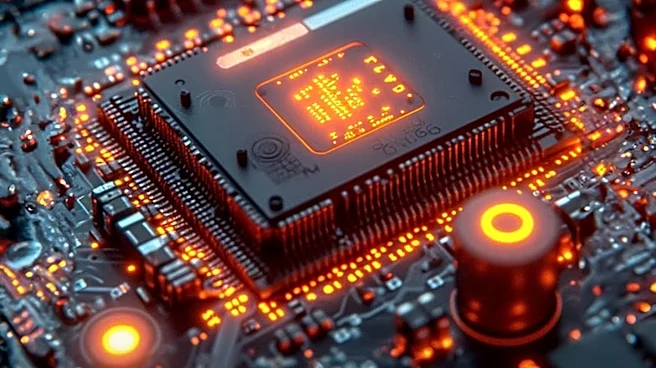
Why are prices so high in the first place? The answer lies in a massive tug-of-war over silicon. The primary drivers of gaming PC costs—the Graphics Processing Unit (GPU) and the system memory (RAM)—both rely heavily on DRAM-based chips. Currently, there is a global shortage of these chips, and the culprit isn't a lack of manufacturing capability, but a massive shift in demand. AI data centers are consuming vast amounts of high-bandwidth memory (HBM) and standard DRAM. Because HBM is produced using the same wafer capacity as the GDDR memory used in gaming graphics cards, every wafer diverted to an AI accelerator is one that cannot be used to build a gaming GPU. This supply squeeze is expected to persist, with some industry analysts suggesting the shortage could last well into 2028.
Comparing the Real Costs
The disparity between launch prices and current street prices is staggering. For example, the NVIDIA RTX 5090, which launched with an MSRP of $1,999, has seen prices climb to between $6,199 and $6,599 in recent weeks. Even the mid-range RTX 5080 is frequently listed at nearly double its original $999 MSRP. It is not just the GPUs; memory is also seeing a massive spike. A 32GB DDR5-6000 memory kit that sold for well under $150 in 2025 is now hovering in the $450 to $550 range. When the core components of a build are three times more expensive than they were a year ago, a Black Friday coupon feels less like a steal and more like a minor consolation prize.
Where to Actually Find Savings
If you are looking to build or upgrade a rig this holiday season, you have to be strategic about where you hunt. The heavy hitters—the GPUs and the RAM—are unlikely to see meaningful price drops because retailers simply do not have the excess inventory to burn. Instead, the real value this year is found in the peripherals and secondary components. Items like PC cases, cooling fans, keyboards, mice, headsets, and certain SSDs are much more likely to see genuine, meaningful discounts. These are the parts where retailers actually have surplus stock, and while they won't slash your total build cost by hundreds of dollars, they represent the only true 'deals' currently on the table.