






Not a Cloud, but Concrete and Glass
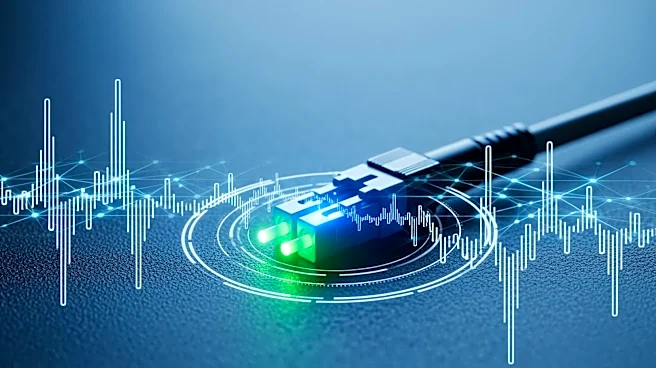
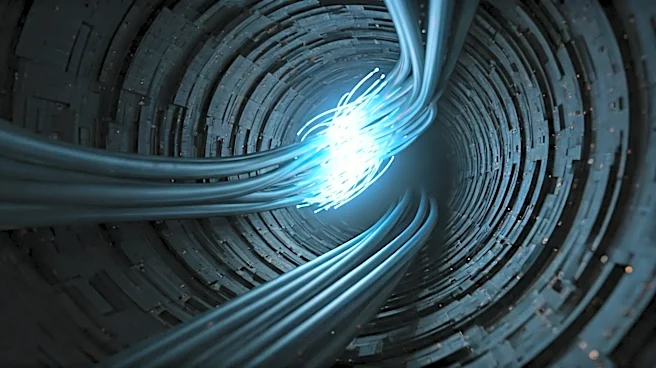
Let’s get one thing straight: the internet is a profoundly physical thing. While we talk about 'the cloud,' our data doesn't float in the sky. It rockets through hundreds of thousands of miles of fiber-optic cables—many no thicker than a garden hose—buried
under our streets and laid across desolate ocean floors. These cables are the internet's skeleton, its federal highway system. When you use an app, stream a song, or join a video call, you're not pulling data from thin air. You're sending a request that travels at nearly the speed of light along these glass threads, connecting your device to a server that might be thousands of miles away. The 'internet backbone' is the collection of the largest, fastest, and most significant of these pathways, owned and operated by a handful of massive telecommunications companies.
The VIP Club: Tier 1 Networks
Not all internet networks are created equal. At the very top of the pyramid are the Tier 1 networks. Think of them as the founders and landlords of the internet's core infrastructure. These are companies like AT&T, Lumen Technologies (formerly CenturyLink), and Verizon. What makes them 'Tier 1' is a simple, powerful distinction: they don’t have to pay anyone else to access the internet. Their networks are so massive and globally interconnected that they can reach any other part of the internet just by connecting to their peers. They own the long-haul fiber that crosses continents and oceans. They are the ultimate wholesalers of internet connectivity, forming a small, exclusive club that collectively *is* the global internet.
The Handshake Deals That Power the Web
So how do these giants work together? This is where the 'quietly' part comes in. The core of the internet runs on a system of trust and mutual benefit called 'peering.' A Tier 1 company like Lumen makes a deal with a peer like AT&T. The agreement is simple: 'I'll carry your network's traffic to its destination for free, and you do the same for me.' It’s a handshake deal at a colossal scale, allowing data to flow seamlessly between the world’s largest networks without money changing hands for the traffic itself. This is different from 'transit,' which is what smaller networks do. Your local Internet Service Provider (ISP), like Comcast or Spectrum, is a Tier 2 network. They pay a Tier 1 provider for access to the global internet—a cost they then pass on to you as your monthly bill.
From Backbone to Your Phone Screen
Let's trace a real-world example. You open a work collaboration tool like Slack, which runs on Amazon Web Services (AWS). Your request leaves your computer, travels through your local ISP's network, and hits a point where your ISP pays for a 'transit' connection onto a Tier 1 backbone. That Tier 1 network then carries your request across the country to a massive data center in, say, Virginia, where the AWS servers live. The server processes your request and sends the data back along the same superhighway path. This entire round trip happens in milliseconds. The speed, reliability, and existence of the software you use every day—from Netflix and Spotify to Salesforce and Microsoft 365—is completely dependent on the capacity and efficiency of these invisible backbones. When one of these major networks has a problem, as occasionally happens, huge swaths of the internet can suddenly feel broken, demonstrating just how foundational they are.