





First, What Is Meta-Learning?
Think of it this way: standard AI is like a student who crams for a single, specific exam. They might memorize every possible answer for a history test, but they’re lost if you ask them a math question. Meta-learning, on the other hand, is like teaching
a student *how to study*. Instead of memorizing facts for one test, they learn strategies for acquiring new knowledge efficiently. When a new subject comes up, they don't start from scratch; they apply their learned study habits to master it quickly. In AI terms, meta-learning models are trained not on a single task, but on a wide variety of tasks. This process forces them to develop a generalized ability to learn. The ultimate prize is an AI that can adapt to a new, unseen challenge with very little data and in a fraction of the time it would normally take. It’s the difference between an AI that’s a one-trick pony and one that’s a versatile problem-solver.
Prediction 1: Hyper-Personalization on Steroids
Today’s personalization is fairly crude. Netflix recommends shows based on what millions of similar users watched. But what if it could understand your unique, evolving taste from just a handful of ratings? That’s where meta-learning comes in. Over the next decade, expect to see this “few-shot learning” capability transform consumer tech. Imagine a healthcare app that can create a customized fitness plan based on the data from just a few workouts, or a medical diagnostic tool that can identify a rare disease variant in a new patient by generalizing from a small number of previous cases. This moves beyond demographic buckets and into true, one-to-one personalization, making services from medicine to education feel like they were built just for you.
Prediction 2: Smarter, More Adaptable Robots
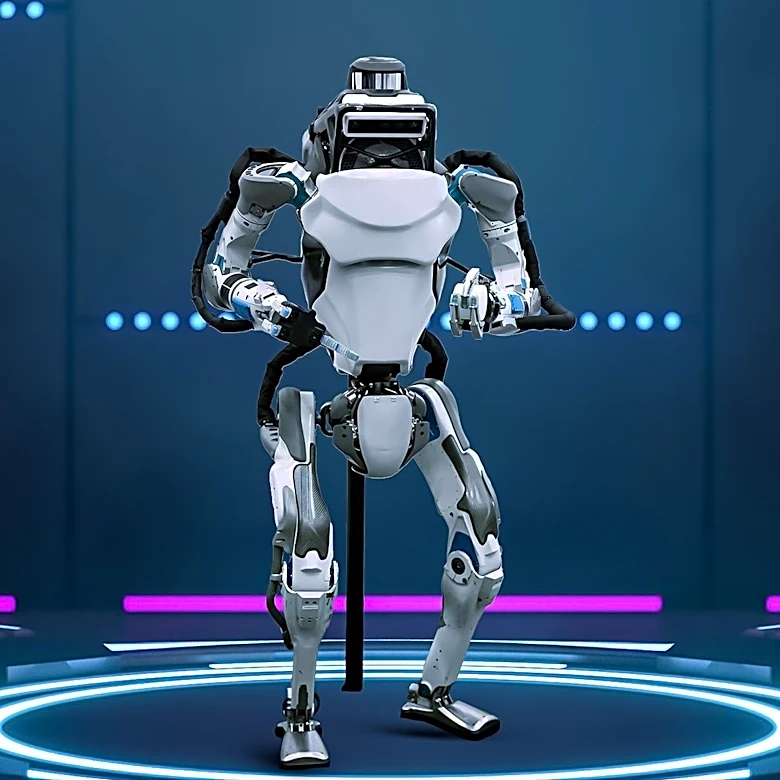
One of the biggest hurdles in robotics is generalization. A robot trained to pick up a specific blue cube in a lab will often fail spectacularly if you ask it to pick up a slightly different red ball. Retraining it for the new object can take millions of simulation cycles. Meta-learning offers a way out. By training a robot on a wide range of “picking up” tasks—different objects, lighting, and angles—it learns the underlying concept of grasping. Within the next ten years, this will likely lead to robots that are far more useful in unpredictable environments like warehouses, construction sites, and even homes. A logistics robot could handle a constant stream of new package shapes without needing a software update for each one, dramatically increasing efficiency and flexibility.
Prediction 3: The End of the ‘Big Data’ Bottleneck
The dirty secret of the current AI boom is its insatiable appetite for data. Training a large language model can require a dataset the size of the entire public internet. This creates a massive barrier for smaller companies or researchers in fields where data is scarce, like rare disease research or specialized engineering. Meta-learning flips the script. Because it excels at learning from just a few examples, it will democratize AI development. A small startup could develop a sophisticated fraud-detection model tailored to its specific customer base without needing a billion transactions to train it. This will unlock AI’s power for a much wider range of niche problems that are currently ignored because the data isn't big enough to be profitable.
The Reality Check: What It Won't Do
For all its promise, meta-learning is not a silver bullet for creating Artificial General Intelligence (AGI), or a conscious, thinking machine. It’s a powerful tool for making AI more efficient and adaptable within specific domains, but it doesn't bestow common sense or true understanding. A meta-learned model is still a complex pattern-matching system, not a creative thinker. It’s very good at learning *how* to perform new tasks that are similar to what it's seen before, but it can’t reason from first principles or make intuitive leaps into completely novel territory. The next decade will see meta-learning make our existing AI tools far more practical and widespread, but the dream (or fear) of a truly human-like intelligence remains firmly in the realm of science fiction.