



Before Jay-Z, An Audiophile's Dream
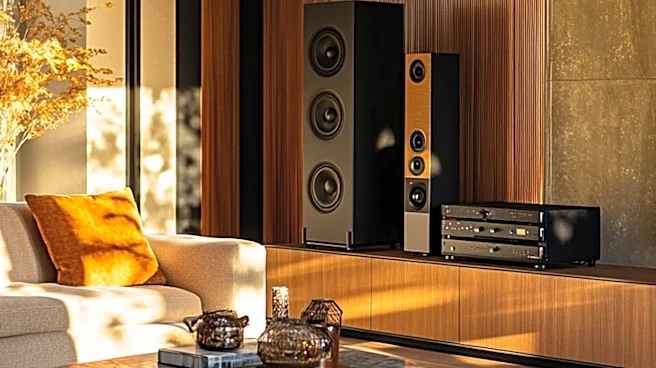
Long before a stage of superstars made it famous, Tidal began its life as a niche service with a simple, powerful idea. Launched in 2014 by Norwegian company Aspiro, the platform was originally built for audiophiles—listeners who felt that the compressed,
data-friendly files offered by mainstream services were a disservice to music. It offered lossless, CD-quality audio at a time when competitors were focused on scale, not sound. It was a premium product for a small but passionate base, carving out a space for those who wanted to hear music as the artists and engineers intended. This foundational focus on audio fidelity was the first pillar of its identity, a commitment that would outlast the celebrity drama to come.
The Celebrity Relaunch and Its Backlash
In March 2015, Jay-Z acquired Aspiro for $56 million and relaunched Tidal with a now-infamous press conference. Standing alongside co-owners like Beyoncé, Madonna, and Kanye West, Alicia Keys declared it the first-ever artist-owned global music platform, promising a revolution. The mission was twofold: preserve high-fidelity sound and create a more equitable payment system for creators. But the optics were disastrous. A group of millionaires complaining about not getting paid enough struck many as tone-deaf, sparking immediate backlash and accusations of elitism. Instead of inspiring a movement, the launch created a cloud of skepticism that would hang over the service for years.
The Quiet Revolution: Artist Payouts
Beneath the noise of the botched launch, Tidal's core promise on artist compensation was more than just talk. While its small subscriber base meant it couldn't compete with Spotify's massive volume, its per-stream payout rate has consistently been among the highest in the industry. By 2026, Tidal's per-stream rate is estimated to be roughly $0.013, significantly higher than Spotify’s $0.003 to $0.005. The platform has also experimented with models like direct-to-artist payouts, where a portion of a user's subscription fee goes directly to their most-streamed artists. This artist-centric approach, while not a silver bullet, represented a tangible effort to challenge the industry's dominant economic model, influencing conversations about fair pay across the entire streaming landscape.
The Long Game: High-Fidelity Goes Mainstream
For years, Tidal's high-fidelity audio was seen as an expensive luxury for a niche audience. But the company's stubborn commitment to quality eventually paid off as the rest of the market caught up. Competitors like Apple Music and Amazon Music eventually introduced their own lossless offerings, validating Tidal's original premise. In a major strategic move, Tidal simplified its pricing in the mid-2020s, merging its tiers into a single, competitively priced plan that offered HiRes FLAC audio to all subscribers. It shed its proprietary MQA format for the open-source FLAC, making high-resolution audio more accessible than ever. What started as a premium feature for audiophiles has now become a key battleground for all major streaming services.
Tidal's Legacy Under Block
In 2021, Square (now Block, Inc.) acquired a majority stake in Tidal, signaling a new chapter for the company. Under Jack Dorsey's leadership, the focus has shifted toward integrating financial tools for artists, seeing music as the starting point for a creator-centric economy. While still a small player in terms of market share, Tidal's journey forced important conversations. It championed high-quality audio until it became a standard expectation and consistently advocated for better artist pay, even when its celebrity-heavy messaging fell flat. The headlines were about a glitzy launch, but its real history is about pushing two fundamental ideas that have permanently shaped the music industry.