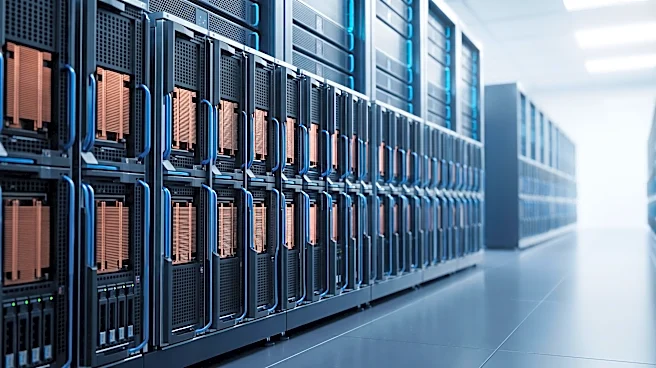







In the Silicon Valley playbook, building a world-changing AI startup means one thing: racks of Nvidia's latest, most powerful GPUs. But this obsession with top-tier hardware, often costing tens of thousands of dollars per chip, is a costly myth.
The Allure of the Cutting Edge
The belief
that you need the best is seductive. Startups see tech giants and well-funded labs training massive models on thousands of H100 or B200 GPUs and assume that's the only path to success. Having the latest hardware can feel like a signal to investors that you're serious, and for a tiny fraction of companies training foundational models from scratch, that raw power is indeed necessary. An individual H100 GPU can cost between $30,000 and $40,000 to purchase outright. This has created a cult of the cutting edge, where founders feel pressured to chase the biggest, most expensive hardware, regardless of their actual needs.
Training vs. Inference: The Real Story
The most crucial distinction many startups miss is between training and inference. Training is the computationally brutal process of teaching a model, which can require immense power. But most startups aren't training a new GPT-4 from zero. They're often fine-tuning existing models or, more commonly, focusing on 'inference'—using a pre-trained model to make predictions. Inference has vastly different hardware needs, prioritizing low latency and efficiency over raw horsepower. While training a huge model might require holding over 800GB of data in memory, inference on that same model might need less than 150GB, and can often run on smaller, cheaper GPUs.
The Cloud Is Your Co-Pilot
Before even thinking about buying, startups should look to the cloud. Instead of a massive capital expense, renting GPU time from cloud providers allows you to pay for what you use. Hyperscalers like AWS, Google Cloud, and Azure offer a wide array, but a growing ecosystem of specialized GPU cloud companies often provide the same hardware for significantly less. On-demand rates for an H100 can be 50-75% cheaper on a specialized cloud compared to a major one. Hourly rental rates for an H100 can range from over $12 on a hyperscaler to as low as $2-$4 on a specialized provider. This makes renting a far more flexible and capital-efficient strategy, especially when your needs are experimental or fluctuating.
'Good Enough' is the New 'State of the Art'
The smartest startups aren't just looking at the top of the line. For many tasks, older-generation Nvidia cards like the A100 or even consumer-grade GPUs like the RTX 4090 are more than sufficient, especially for early-stage development, fine-tuning, and inference. One analysis showed that for fine-tuning a small model, a cluster of RTX 4090s was significantly more cost-effective than using H100s. Furthermore, competitors are increasingly viable. AMD's MI300X, for example, offers more than double the memory of the H100, making it better for certain inference workloads. The ecosystem is also expanding with custom chips from startups like Groq, Cerebras, and SambaNova, which are designed for specific AI tasks and can outperform general-purpose GPUs on them.