








An Idea Before Its Time
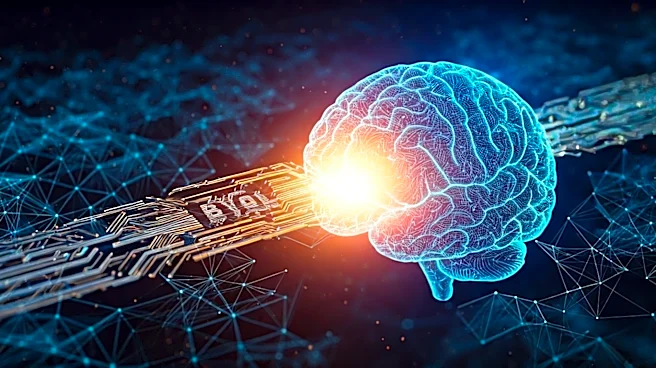
First, let's clear up the terms. Machine learning (ML) is a broad field of AI where systems learn from data to make predictions or decisions. Deep learning (DL) is a specific, more advanced type of ML that uses complex structures called neural networks,
which are loosely inspired by the human brain. Here’s the surprising part: the foundational concepts for neural networks have been around since the 1950s and 60s. Early pioneers like Frank Rosenblatt developed the "Perceptron," a primitive neural network, envisioning a machine that could learn and recognize patterns. The New York Times breathlessly reported in 1958 that it would be a machine that could walk, talk, and be conscious of its own existence. It didn’t. The initial excitement quickly fizzled out as researchers hit a wall. The simple models couldn't solve complex problems, and the computing power to run anything more ambitious simply didn't exist. This led to the infamous “AI winter,” a long period starting in the 1970s when funding dried up and the entire field was dismissed as a dead end by many.
Ingredient #1: The Slow-Burning Algorithm
While most of the world forgot about AI, a handful of dedicated researchers kept the flame alive. In the 1980s, Geoffrey Hinton, Yann LeCun, and others championed a crucial technique called “backpropagation.” This algorithm was the key to training more complex, multi-layered neural networks—the “deep” in deep learning. It allowed a network to learn from its mistakes much more efficiently by working backward from an incorrect output to adjust its internal connections.
However, even with this algorithmic breakthrough, progress was agonizingly slow. Training a deep network on the computers of the 80s and 90s could take weeks or even months to solve a problem that a human could do in seconds. The theory was sound, but it was like having a blueprint for a skyscraper with only enough bricks to build a shed. The algorithm was ready, but it was waiting for two other critical components to show up.
Ingredient #2: The Data Deluge
The second ingredient was data—and not just a little bit. A lot of it. Deep learning models are incredibly data-hungry. A human can learn to recognize a cat after seeing just a few, but a neural network needs to see millions of examples. For decades, such massive, labeled datasets didn't exist.
The internet changed everything. Suddenly, the world was generating a torrent of digital information: photos on Flickr, articles on Wikipedia, and countless other forms of structured and unstructured data. A pivotal moment came in 2009 with the creation of ImageNet, a massive, free database containing over 14 million hand-labeled images. It became a benchmark for testing computer vision models, providing the exact kind of high-quality, large-scale training data that deep learning algorithms had been starved for. The fuel had finally arrived.
Ingredient #3: The Unlikely Hardware Hero
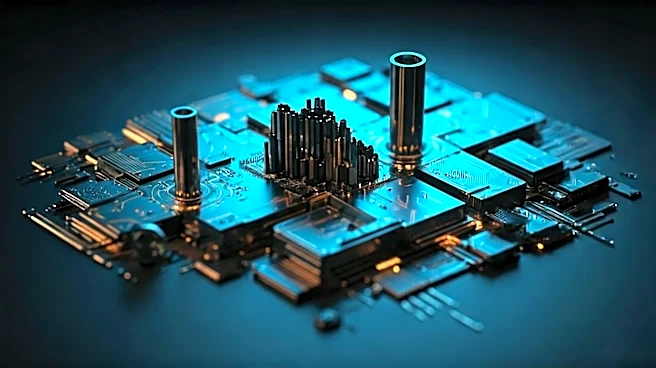
Even with the right algorithms and massive datasets, one piece was still missing: the engine. Training a deep neural network on millions of images requires an colossal amount of parallel computation. Central Processing Units (CPUs), the brains of traditional computers, are designed for sequential tasks and were hopelessly slow for the job.
The breakthrough came from an unexpected place: the video game industry. Graphics Processing Units (GPUs) were designed to render complex 3D graphics, a task that involves performing millions of simple, parallel calculations at once to color all the pixels on a screen. Researchers in the mid-2000s realized this architecture was perfectly suited for the math of deep learning. A powerful GPU could perform the necessary calculations orders of magnitude faster than a CPU. This was the final, crucial piece of the puzzle. The convergence was complete, famously demonstrated at the 2012 ImageNet competition, where a GPU-powered deep learning model shattered all previous records for image recognition.