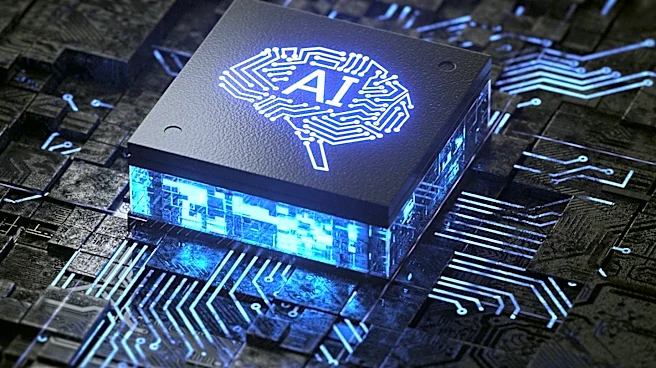









The GPU is the engine behind the AI revolution, but this powerful chip wasn't built for artificial intelligence. It was built for video games. The secret to its current dominance lies in the architectural choices made decades ago to solve one problem:
making pixels look pretty.
The Quest for Realistic Pixels
In the 1990s, the frontier of personal computing was 3D graphics. Game developers wanted to create immersive, realistic worlds, but the Central Processing Unit (CPU)—the computer's brain—was struggling. A CPU is a master of all trades, designed for sequential, complex tasks, like running an operating system or a spreadsheet. But rendering a 3D scene involves millions of simple, repetitive calculations for every single frame. The CPU, a brilliant generalist, was overwhelmed by this brute-force task. The industry needed a specialist. In 1999, NVIDIA coined the term 'GPU' with the release of the GeForce 256. Its purpose was narrow and clear: to offload the heavy lifting of graphics calculations, like textures and lighting, from the CPU, allowing for smoother and more detailed game worlds.
An Army of Specialized Workers
The core innovation that made GPUs so good at graphics was their embrace of parallel processing. Think of a CPU as a single, world-class chef who can expertly prepare any dish one at a time. A GPU, in contrast, is like an army of a thousand line cooks, each given the same simple task—like chopping a carrot—to perform simultaneously. While any single cook isn't as skilled as the master chef, their combined output on a repetitive task is astronomical. This 'single instruction, multiple data' (SIMD) approach was perfect for graphics, where the same lighting or color calculation needed to be applied to millions of pixels at once. GPUs were designed with thousands of smaller, more efficient cores, all working in parallel. This architecture, born from the demands of visual rendering, was the 'real reason' that would unintentionally prepare the GPU for a much bigger future.
The Unintended GPGPU Revolution
For years, this immense parallel power was locked away, accessible only for graphics. Then, in the early 2000s, researchers began to realize this 'army of workers' could do more than just render pixels. They saw that the repetitive math used in scientific simulations, financial modeling, and data analysis looked a lot like the math used in graphics. The era of General-Purpose computing on GPUs (GPGPU) was born. The real turning point came in 2007 with the launch of NVIDIA's CUDA platform. CUDA was a programming model that gave developers a key to unlock the GPU's thousands of cores for non-graphics tasks. Suddenly, a component designed for gaming became a powerful, accessible supercomputer for scientists and engineers. Tasks that once took weeks on CPUs could be done in hours or days.
From Pixels to Predictions
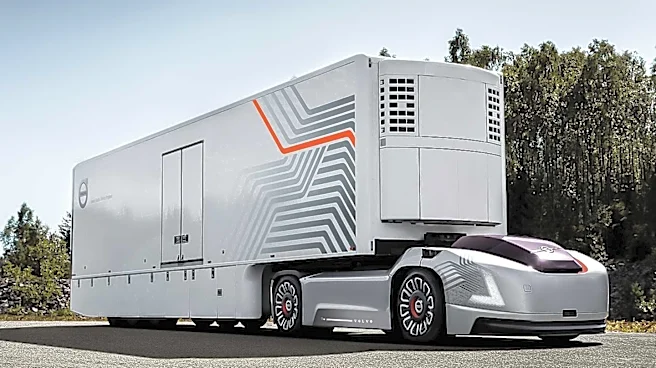
This GPGPU revolution laid the groundwork for the modern AI boom. The core of training an AI, particularly in deep learning, involves performing massive matrix calculations on enormous datasets—a task that is intensely repetitive and highly parallel. It was a perfect match for the GPU's architecture. In 2012, a GPU-trained neural network named AlexNet shattered records at an image recognition competition, proving the immense advantage of parallel processing for AI. That event was a seismic shift. From that point on, GPUs became the default hardware for serious AI research and development. The same design that was once dedicated to calculating the glint of light on a sword in a video game was now being used to train large language models, discover new drugs, and power autonomous vehicles. Its future was written in its code from the very beginning.