







Lesson 1: Solve a Real Problem
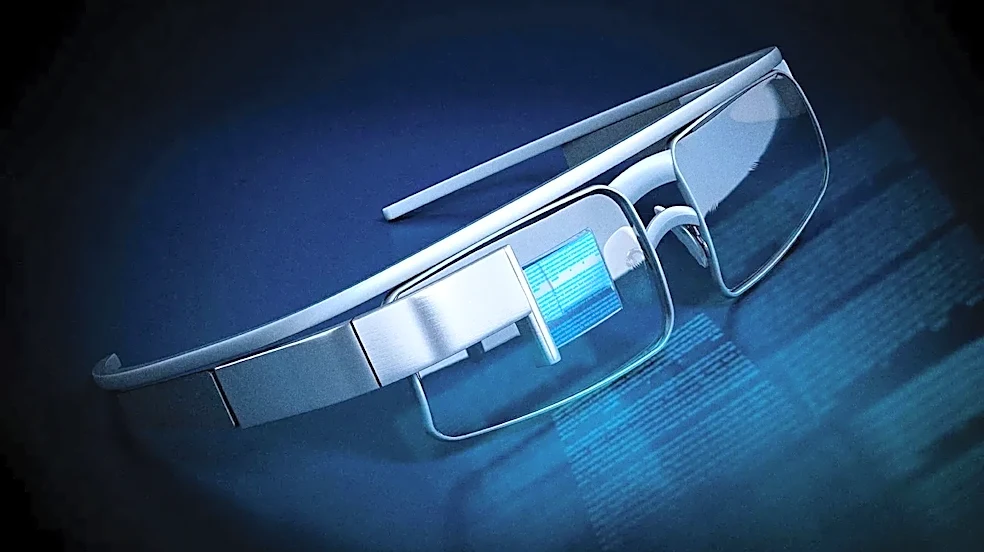
Google Glass was a technological marvel that struggled with a fundamental question: what is this for? Beyond the initial 'wow' factor, it lacked a killer application for the average person. It could take pictures, show directions, and display notifications,
but it didn't solve a problem that a smartphone couldn't handle more discreetly and often more effectively. This failure to establish a clear use case or product-market fit was a critical flaw. The first generation of dedicated AI wearables, like the Humane Ai Pin and Rabbit R1, stumbled into the same trap. They launched to brutal reviews, with critics pointing out that the devices were slow, unreliable, and couldn't do much that a phone couldn't already do. The lesson for today's creators is blunt: technology for its own sake isn't enough. A successful wearable must offer a unique, compelling value that justifies its existence, its price, and the space it takes up in our lives.
Lesson 2: Design for Social Acceptance
Perhaps the most enduring legacy of Google Glass was the creation of a new slur: 'Glasshole.' The term captured the social unease created by a device that was always on, always watching. The forward-facing camera was perceived as intrusive, and the tech-forward design was anything but subtle, instantly branding the wearer as an outsider. It failed the fashion test and created a privacy backlash that made wearing it in public a liability. Learning from this, the most successful smart glasses today, like the Meta Ray-Ban series, prioritize style and subtlety. By hiding the technology within a classic, universally accepted form factor, they avoid the 'Glasshole' trap. Google’s own new smart glasses, developed in partnership with Warby Parker and Gentle Monster, are a direct acknowledgment of this lesson: for a wearable to be worn, it must first be wearable in a social context.
Lesson 3: Nail the Go-to-Market Strategy
Google’s rollout of Glass was a case study in mismanaged expectations. The 'Explorer Program' sold a $1,500 prototype to tech enthusiasts and developers, blurring the line between a beta test and a consumer launch. This created massive hype but also positioned an unfinished, expensive product in the hands of the public, who judged it by the standards of a finished device. It was a product for engineers, by engineers, that was never properly positioned for a mainstream audience. The fallout was so significant that when the consumer version was eventually canceled in 2015, it was widely seen as a failure. Contrast this with the more focused strategies of today. While the Humane and Rabbit launches were fraught with their own issues, they were at least clearly positioned as first-generation attempts at a new category. The longer, more iterative approach seen with Meta's glasses and Google’s new ecosystem-focused AI eyewear suggests a more cautious and strategic market entry.
Lesson 4: It Might Not Be About Consumers at All
While the consumer version of Google Glass flamed out, the project didn't die. It was reborn as the Google Glass Enterprise Edition, a product that found quiet success in specific industrial and medical settings. In factories, warehouses, and operating rooms, a hands-free, voice-activated computer isn't a social novelty; it's a powerful tool for efficiency and safety. This pivot holds a crucial lesson: sometimes the most revolutionary technology finds its footing not with the masses, but in niche professional markets where it solves a high-value problem. As the next generation of AI wearables struggles to find its consumer appeal, some may discover that their true calling lies away from the public eye, empowering professionals in specialized fields. The ultimate success of a technology isn't always measured in mass-market sales, but in the impact it has where it is needed most.