







The Single-Story Sprawl Problem
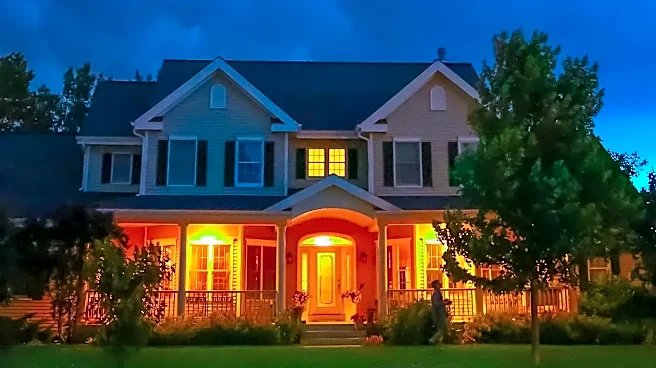
The main challenge with a ranch house isn't its height, but its length. Wi-Fi signals are like a voice yelling from a single point; the farther away you are, the fainter it gets. In a multi-story home, the router might be centrally located, with rooms
clustered relatively close by on different floors. In a long, sprawling ranch, the signal has to travel a much greater horizontal distance to reach a back bedroom or home office. This long path means the signal has to punch through numerous interior walls, each one chipping away at its strength. Every wall the signal crosses can absorb and weaken it, meaning a room at the far end of the house might receive only a fraction of the original signal power.
Your Walls Are Wi-Fi Killers
Not all walls are created equal. While modern drywall is relatively easy for Wi-Fi to penetrate, the construction materials in many classic American ranch homes are another story. Older ranches, in particular, may feature plaster-and-lath walls, which can contain a metal mesh that acts like a shield, reflecting or absorbing radio waves. Brick fireplaces, stone features, and even dense concrete sections can also be brutal on a Wi-Fi signal. This problem is compounded by modern router technology. The faster 5 GHz and 6 GHz bands, which are great for speed, have shorter wavelengths that are less effective at penetrating dense materials compared to the older, more crowded 2.4 GHz band. So that blazing-fast router may struggle to get its signal through even one brick wall.
The Engineer's Fallacy
So why does this trip up an engineer? Often, it's a case of overthinking the problem. A tech-minded person might immediately start diagnosing complex issues like channel interference, router firmware, or advanced network settings. They might run a speed test right next to the router, see a fantastic number, and conclude the internet service itself is fine. But they're solving for the wrong variable. The issue isn't a software glitch or a configuration error; it's a brute-force physics problem. The signal simply isn't strong enough to physically reach the other end of the house. No amount of channel-switching can fix a signal that has been absorbed by three walls and a fireplace.
Speed and Strength Are Not the Same
This leads to the most common misunderstanding of all: a speed test doesn't measure Wi-Fi coverage. A speed test tells you how fast your connection is at the specific spot where you're standing. It measures bandwidth, not signal strength throughout your home. You can have gigabit speeds in your living room where the router is, and a complete dead zone in the office just 50 feet away. Relying solely on a speed test is like checking the water pressure at the fire hydrant and assuming every house on the block is fine. What you really need to understand is signal strength, often measured in dBm, which tells you how much usable signal is actually reaching your device.
The Right Fix: Think Coverage, Not Just Speed
The solution for a ranch house is almost always to improve coverage, not to buy a faster internet plan. For many, the answer is a mesh Wi-Fi system. Unlike a single router, a mesh system uses multiple nodes placed around your home to create a single, unified network. One node connects to your modem, and the others are placed strategically to relay the signal, blanketing the entire property in strong, consistent Wi-Fi. This overcomes the distance and material barriers by creating multiple signal sources instead of relying on one. While a simple range extender can help with a single dead spot, a mesh system is a more robust, whole-home solution for the sprawl of a ranch. It ensures that the speed you pay for is actually available in every room.