

In a world where new software is old news in a year, one open-source tool from the 1980s is still a heavyweight champion. Tesseract, the engine that turns images into text, has somehow defied obsolescence. How did it do it?
A Head Start from a Corporate Lab
Tesseract’s story doesn't start
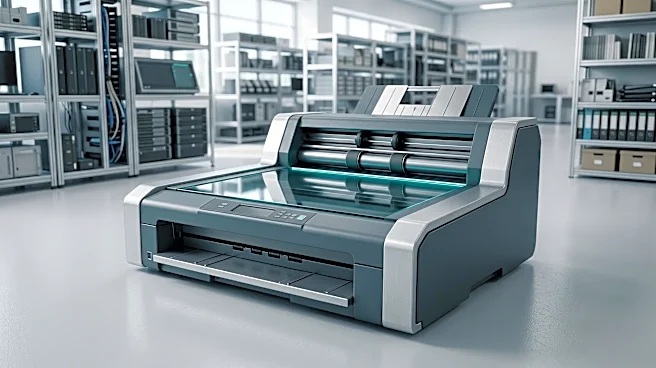
in a garage, but in the well-funded labs of Hewlett-Packard back in 1985. HP wanted to build a market-leading OCR engine for its new line of flatbed scanners. For a decade, a dedicated team worked to make it more accurate than any commercial competitor, especially on poor-quality images. By 1995, it was one of the top three most accurate OCR engines in a major university test. After being shelved for ten years, HP open-sourced it in 2005. This gave Tesseract a massive head start: it entered the open-source world as a mature, battle-tested engine, not a scrappy newcomer.
The Google Growth Spurt
A year after it went open-source, Google took over stewardship of the project in 2006. This was the second critical ingredient for its longevity. While many open-source projects rely solely on volunteer passion, Tesseract got the backing of a tech giant. Google's sponsorship provided resources, stability, and, most importantly, cutting-edge development. With version 4.0 in 2018, Google integrated a modern LSTM-based neural network, dramatically boosting its accuracy and language support, and keeping it technically relevant. This corporate backing ensured it could evolve with the fast-moving field of machine learning.
The Dependable, CPU-Friendly Workhorse
In the open-source OCR world of 2026, a major split has occurred. On one side are new, powerful but resource-hungry models that often require expensive GPUs to run effectively. On the other is Tesseract. It remains one of the only truly viable options that runs efficiently on a standard CPU. For developers building applications without a big hardware budget, or for tasks involving high volumes of clean, simple documents like invoices or scanned book pages, Tesseract is often the fastest and most cost_effective choice. Its reputation is that of a reliable, 'good enough' tool that gets the job done without expensive overhead.
An Unbeatable Ecosystem
A tool's true power often lies in its community, and Tesseract's is massive. Its long history means there's a solution for almost any problem on forums like Stack Overflow. It supports over 100 languages out of the box. Crucially, developers have built countless 'wrappers'—like the wildly popular 'pytesseract' for Python—that make it incredibly easy to integrate into modern applications. This ecosystem creates a powerful network effect. While newer engines might claim higher accuracy on specific benchmarks, they often lack the deep well of tutorials, integrations, and community knowledge that makes Tesseract so easy to deploy.
The Shifting Landscape of Rivals
The headline's claim of 'outlasting every rival' requires some nuance in 2026. While Tesseract dominated for years, the landscape has become more crowded. Newer, specialized open source models like PaddleOCR, Surya, and GLM OCR now often beat Tesseract on accuracy benchmarks, especially for complex documents with tables or varied layouts. However, many of these are part of a new generation of AI that requires more powerful hardware. Tesseract hasn't necessarily defeated these new rivals, but it has carved out an enduring niche. It remains the default baseline: the free, accessible, and versatile engine that new competitors are still measured against, which is its own form of victory.