








The Race for a Brain in a Vat
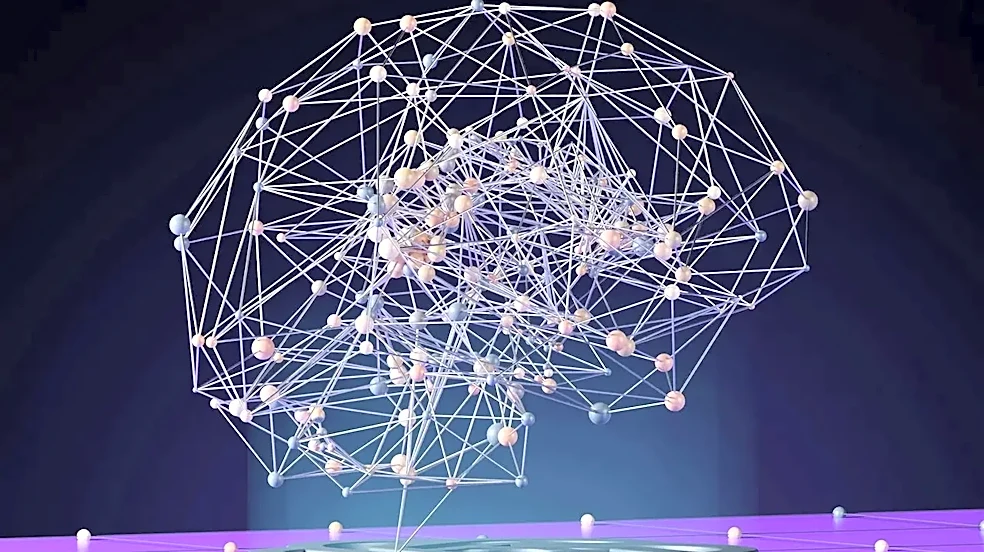
Right now, the prevailing strategy for creating AGI—an AI that can learn and reason like a human across diverse tasks—is fairly straightforward: go bigger. The dominant belief, championed by major tech labs, is that scaling up Large Language Models (LLMs)
with more data and immense computational power will eventually lead to a spark of general intelligence. This approach essentially treats intelligence as a problem of pattern recognition and information processing on a massive scale. The goal is to create a disembodied digital brain, a 'brain in a vat' that has read the entire internet, seen billions of images, and can predict, summarize, and generate content with stunning fluency. From a business perspective, it's a brute-force arms race, where the company with the most computing horsepower is seen as the most likely to win.
The Detail Most Engineers Are Skipping
Here’s the detail many engineers, in their intense focus on scaling, tend to skip: the body. A growing number of neuroscientists, roboticists, and AI researchers argue that true, human-like intelligence cannot emerge from data alone. They champion a concept called 'embodied cognition,' the idea that intelligence is fundamentally shaped by having a physical body that interacts with the real world. According to this perspective, intelligence isn't just about processing abstract information; it's about grounding that information in physical, sensory experience. Understanding 'gravity' isn't just about reading its definition and mathematical formulas thousands of times. It’s about the lived experience of falling, of picking up a heavy object, of seeing a ball arc through the air. These experiences create a foundational, non-linguistic understanding of the world—what we often call common sense.
Why Reading the World Isn't Understanding It
An LLM can describe a cat's texture, the warmth of the sun, or the concept of 'wetness' because it has analyzed countless human descriptions of these things. But it has never felt fur, warmth, or water. This is the 'symbol grounding problem': connecting abstract symbols (words) to real-world meaning. Without a body, an AI's understanding is based on a web of statistical relationships in data, not on a direct relationship with reality. This is why even the most advanced models can make bizarre, illogical errors about basic physical concepts. They can write a convincing paragraph about how to grasp a cup but have no genuine comprehension of the physical constraints involved. This 'body gap' means they lack a true world model built from feedback, experimentation, and the consequences of physical action.
The Few Betting on a Physical Future
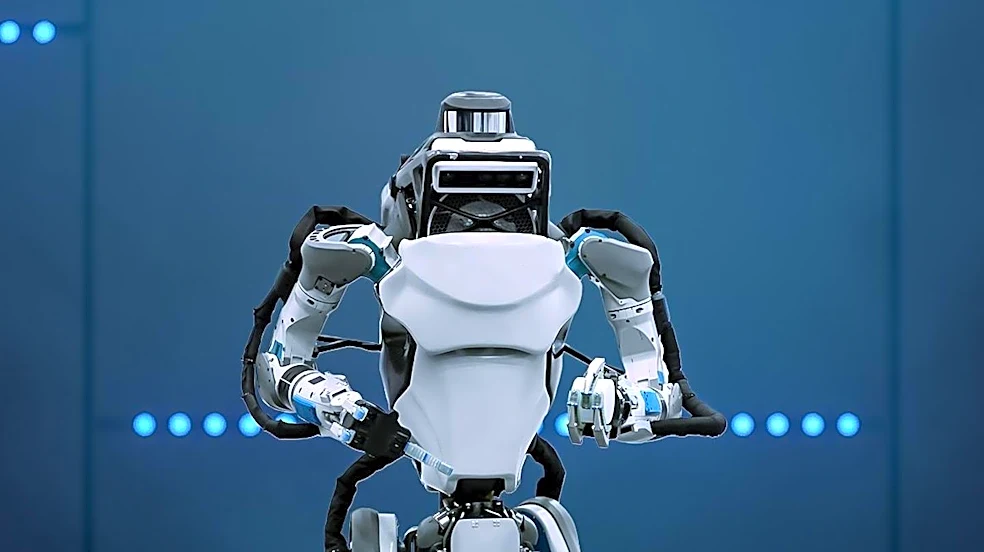
While most of the investment and hype centers on bigger and bigger LLMs, some research is taking a different path. These efforts focus on robotics and embodied AI, not as a separate field, but as a potential prerequisite for AGI. The theory is that by giving an AI a robotic body—with sensors, grippers, and the ability to move through and manipulate the world—it can learn about cause and effect, spatial relationships, and object properties in a way a purely digital model never can. For example, OpenAI famously disbanded its robotics team in the past to focus on large-scale models, a move that highlights the divide in strategy. However, the proponents of embodiment argue that an AI that learns by physically stacking blocks will develop a more robust and generalizable intelligence than one that has only ever read about it. This approach is slower and less glamorous, but it may be building on a more solid foundation for true reasoning.