






The Dawn of the Dial-Up
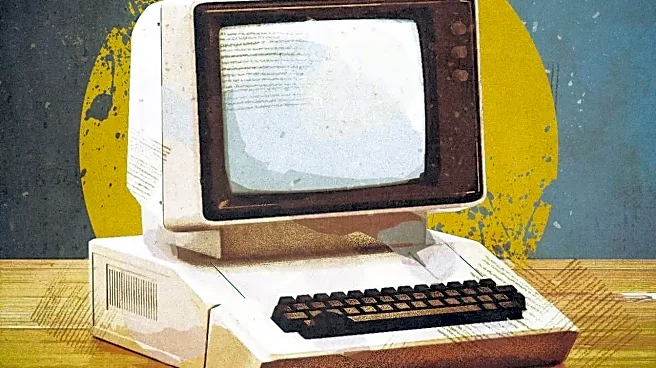
Imagine a world without websites. From the late 1970s through the mid-1990s, the digital frontier was the Bulletin Board System, or BBS. The first, CBBS, was launched in Chicago during the blizzard of 1978 by Ward Christensen and Randy Suess. The concept
was revolutionary in its simplicity: a personal computer connected to a modem and a phone line, waiting for someone to call. When you dialed in, your own computer terminal came to life with text-based menus. For most BBSs, only one person could be connected at a time, making every session feel exclusive. The screech and hiss of the modem handshake was the sound of a door opening to another world, a local, digital clubhouse run by a hobbyist known as the System Operator, or 'SysOp'.
The First Social Networks
At the heart of the BBS was the message board, the direct ancestor of every modern forum, subreddit, and social media feed. Here, users adopted handles, crafted digital personas, and engaged in threaded conversations on everything from programming and politics to science fiction and music. These weren't global megasites; they were tight-knit communities, often limited to a single area code to avoid costly long-distance phone charges. This localization fostered a unique culture of belonging. You got to know the regulars, and online friendships often blossomed into real-world meetups. These systems became vital for niche and marginalized groups, with dedicated BBSs for LGBTQ communities, Black interests, and political organizing, providing safe havens for connection long before the mainstream web.
The Original App Stores
Beyond conversation, BBSs were the primary distribution channel for a new category of software: shareware and freeware. The 'files' section of a BBS was a treasure trove where programmers could upload their creations for others to download and try. This system allowed small, independent developers to find an audience without needing a publisher. It was the original App Store, a decentralized marketplace of utilities, text files, and, most importantly, games. The slow download speeds—starting at a crawl of 300 bits per second—made acquiring a new program a patient, deliberate act. This culture of sharing laid the essential groundwork for open-source software and the digital distribution models that now dominate the industry.
Pioneering Online Gaming and Identity
BBSs also gave birth to the first real multiplayer online games through 'door games'. When a user opened a 'door,' the BBS would hand control over to an external program. This allowed for text-based but deeply immersive RPGs and strategy games like 'Legend of the Red Dragon' and 'TradeWars 2002'. Because most systems only allowed one user at a time, these games were turn-based and asynchronous. You'd log on, take your turns for the day, and log off, leaving your mark on a persistent world for the next player. This style of play, dictated by technical limitations, became a feature, building anticipation and strategy over days and weeks. It was in these games and forums that the concept of a persistent online identity, separate from one's real name, became a cultural norm.
The Enduring Blueprint
By the mid-1990s, the BBS world was thriving, with an estimated 60,000 systems in the U.S. alone. But the arrival of commercial services like America Online (AOL) and, more decisively, affordable dial-up access to the World Wide Web, marked the beginning of the end. The graphical, multi-user, and global nature of the web was something the humble, text-based BBS couldn't compete with. SysOps couldn't sustain the cost of multiple phone lines against cheap, flat-rate internet. Yet, the legacy of the BBS is everywhere. Usernames, forums, private messaging, file sharing, community moderation, and online social gaming—all these pillars of modern digital life were born and refined in the quiet, humming world of the BBS. They were the secret beta test for the internet culture we live in today.