






The Undisputed King of the AI Gold Rush
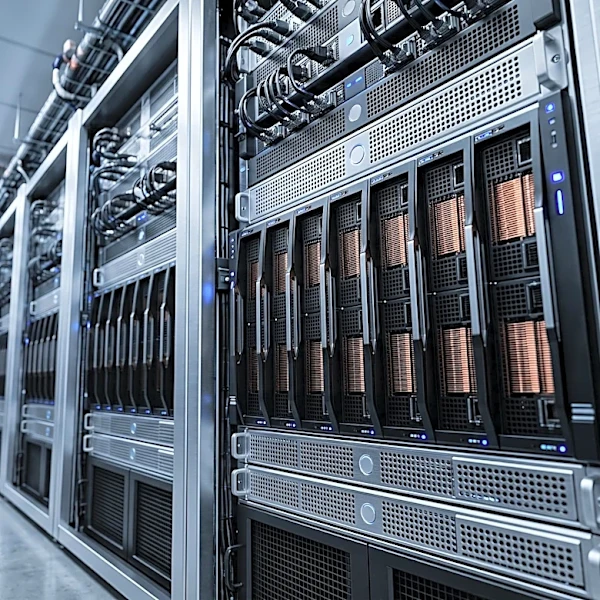
To understand the current AI landscape, think of it as a massive gold rush. In this analogy, Nvidia isn't a gold miner; it's the company selling all the picks, shovels, and heavy machinery. Its data center business, which supplies the powerful graphics
processing units (GPUs) essential for training and running AI models, now accounts for over 90% of its revenue. Companies from tech giants like Google, Amazon, and Microsoft to thousands of startups are buying these chips in unprecedented quantities, fueling Nvidia’s explosive growth. In the last year, its data center revenue has more than doubled, showing just how much capital is being poured into building the infrastructure for AI. Nvidia's success is a direct measure of the investment going into the AI industry, as its hardware has become the foundational building block for nearly every serious AI endeavor.
The Astronomical Price of Admission
While Nvidia collects billions in revenue, its customers face a much different financial reality. The cost of entry into the high-stakes AI game is astronomical. A single high-end GPU can cost tens of thousands of dollars, and building a competitive AI model requires thousands of them running in concert. But the hardware is just the start. The costs of energy, data center leases, and the specialized engineering talent needed to operate these systems are immense. Training a single, cutting-edge foundation model can cost over $100 million, with some projections for future models surpassing $1 billion. Then there's the ongoing cost of 'inference'—the price of running the model to answer queries, which scales with every user interaction and can quickly run into millions of dollars annually. This massive upfront and operational spending happens long before a company can generate a single dollar of profit from its AI application.
The Hunt for Profitable Business Models
This brings us to the core of the issue: Are the companies spending all this money actually making it back? For many, the answer is not yet clear. While AI adoption in the enterprise is widespread, with nearly 9 in 10 companies using it in some capacity, translating that usage into bottom-line profit remains a major challenge. Studies have shown that a high percentage of enterprise AI pilots fail to produce a measurable financial impact. While some businesses are finding success, particularly in established industries like finance and healthcare that use AI for specific, high-value tasks, many others are still searching for a 'killer app' with a sustainable revenue model. The path to profitability is often murky; it requires not just a powerful model, but also a seamless integration into workflows and a clear value proposition that customers are willing to pay for.
Investment Wave, Not a Profit Statement
Nvidia's record-setting earnings are a clear signal of Wall Street's and Silicon Valley's conviction that AI is the future. Companies are willing to spend billions based on that belief. However, that spending is a bet on future returns, not a confirmation of current profitability across the sector. The revenue flowing to Nvidia represents the cost side of the ledger for its customers. The success of the 'gold miners' will only be proven when their AI-powered services—be it through subscriptions, enhanced products, or operational efficiencies—generate enough revenue to overcome their staggering initial and ongoing costs. Until then, Nvidia's dominance tells us a lot about the scale of the AI gold rush, but very little about how much gold has actually been found.