







The Engine of the Old Empire
For nearly two decades, Meta’s business model was stunningly simple and effective. The engine room of this empire wasn’t in a flashy headquarters but in racks of anonymous-looking ad servers. These machines were the heart of the company’s cash-generating
power. Every time you scrolled through Instagram or Facebook, these servers performed billions of lightning-fast calculations to decide which ad to show you, when to show it, and how to price it. They were the delivery mechanism for the hyper-targeted advertising that turned user attention into astronomical profits. This infrastructure allowed Meta to dominate digital advertising, building one of the most profitable businesses in history on the back of incredibly efficient, purpose-built hardware.
The Pivot to AI and Massive GPU Spending
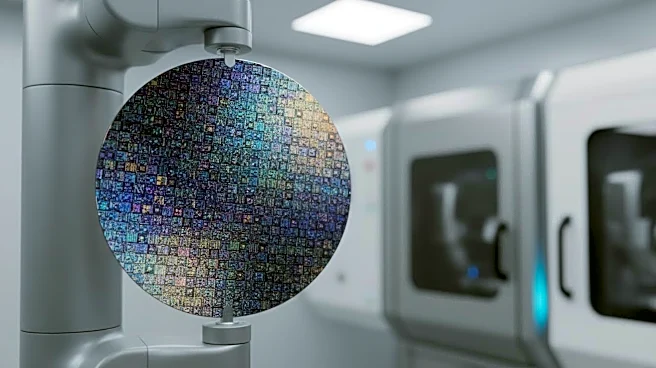
That era is now undergoing a seismic shift. Meta CEO Mark Zuckerberg has committed the company to a future built on artificial intelligence, and he’s backing it up with staggering capital expenditure. The company is in the process of acquiring a massive arsenal of Graphics Processing Units (GPUs), primarily high-end models from NVIDIA. By the end of 2025, Meta planned to possess over a million GPUs, with spending on AI infrastructure projected to reach between $115 and $135 billion in 2026 alone. This isn't just a minor upgrade; it's a fundamental re-architecting of the company’s core infrastructure, swapping out the old engine for a new, far more powerful, and expensive one. This spending spree has left many investors wondering about the return on such a colossal investment.
How a GPU Becomes the New Ad Server
This brings us to the core of the thesis: “GPUs are the new ad servers.” The analogy isn't about the hardware's function but its economic role. An ad server’s job was to “serve” a piece of content (an ad) that generates revenue. In Meta’s new AI-centric world, a GPU’s job is to “serve” an AI-powered interaction that will, eventually, generate revenue. Every time a user interacts with Meta AI, asks a question of an AI assistant in WhatsApp, uses an AI tool to generate an image for a post, or engages with an AI-powered business agent, it’s a GPU cluster doing the work. Each of these interactions is a “serve.” The GPU isn't just training models in a lab; it's becoming the frontline hardware for delivering Meta’s next generation of products to billions of users.
The Path to Monetization
So how does this translate into dollars? The strategy appears to be multifaceted. First, by integrating AI deeply into its existing ad systems, Meta can create more relevant and effective ads, potentially increasing conversion rates and revenue. Second, Meta is developing new product categories entirely, like AI business agents that can handle customer service or sales inquiries directly within Messenger and Instagram. The long-term vision involves AI glasses and other devices where interactions are constant. Finally, Meta is exploring ways to directly monetize its vast compute resources. Recent reports indicate the company is considering renting its excess GPU capacity to other businesses, effectively creating a cloud services division that would compete with Amazon AWS and Google Cloud. This would provide a direct, tangible return on its hardware investment while it develops other AI-driven revenue streams.
The Risks and Rewards of the Big Bet
This strategic pivot is not without significant risk. Meta is spending tens of billions on infrastructure before the revenue models are fully proven, a playbook reminiscent of its costly foray into the metaverse. The challenge is to convert AI interactions into revenue as efficiently as the old ad servers converted clicks. However, the potential reward is immense. If Meta can successfully build the dominant infrastructure for the next wave of AI-powered social and commercial interactions, it could secure its market leadership for another decade. Investors and analysts will be watching upcoming earnings reports not just for ad revenue, but for early signs of AI monetization, user engagement with new AI features, and any revenue generated from its nascent cloud business. The success or failure of this grand experiment will define the next chapter of Meta.