





The Machine That Changed the World
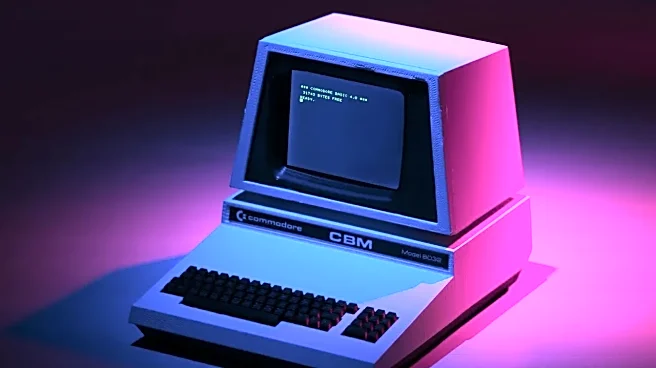
It’s hard to overstate the impact of the IBM PC. When it launched in 1981, it wasn't just another gadget; it was a stamp of legitimacy. Before then, personal computers were largely the domain of hobbyists. But when IBM, the titan of corporate computing,
put its name on a desktop machine, it signaled to the entire business world that PCs were serious tools. The launch was a roaring success. At its peak, IBM was selling a PC every minute of the business day. It set the technical standard for the entire industry, creating a vast ecosystem of software and peripherals. The term “PC” itself became synonymous with “IBM-compatible.” For a few years, IBM was the undisputed king of a market it had essentially willed into existence. Its market share was dominant, and its name was golden.
A Victim of Its Own Success
The secret to the IBM PC’s success was also the seed of its demise in IBM's portfolio. To get the machine to market quickly, IBM used an “open architecture,” relying on components from outside suppliers like Intel for the processor and a new company called Microsoft for the operating system. This decision made it easy for other companies to create their own “IBM-compatible” computers, or “clones.” Soon, companies like Compaq, Dell, and Gateway were building machines that did the same thing as an IBM PC, but cheaper. This kicked off a brutal price war. The personal computer market became a race to the bottom, where products were largely interchangeable and the main selling point was price. This process is called commoditization. For IBM, a company built on high-value, high-margin mainframes and a massive cost structure, competing on price with leaner rivals was a losing battle. By the early 2000s, the once-mighty PC division was reportedly losing money or barely breaking even.
The Unthinkable Decision
By 2004, IBM's leadership, led by CEO Sam Palmisano, faced a hard truth. The PC division, despite its iconic status, was an anchor. Every dollar and every hour of executive attention spent fighting for thin margins in the PC business was a resource not being invested in the company's future. That future, as Palmisano and his predecessor Lou Gerstner saw it, was in high-value services, consulting, and enterprise software. While PC hardware might generate single-digit profit margins, a consulting or software deal could be vastly more lucrative. So, they made a decision that shocked the industry: they decided to sell. In late 2004, IBM announced it was selling its entire Personal Computing Division, including the revered ThinkPad laptop brand, to a then-lesser-known Chinese company named Lenovo for $1.75 billion. It wasn't an act of surrender; it was a strategic amputation designed to make the rest of the company healthier.
Life After the PC
Many critics at the time saw the sale as the end of an era, a sign of an American icon's decline. They couldn't have been more wrong. For IBM, shedding the low-margin PC business was liberating. The company doubled down on its pivot to a B2B services and software powerhouse, helping large corporations manage their complex technology needs. The move paid off handsomely, boosting profitability and solidifying its position in the enterprise market. Meanwhile, the deal was transformative for Lenovo. It gained an iconic brand, a global distribution network, and top-tier engineering talent overnight. Lenovo invested heavily in the business, leveraging its manufacturing scale to compete effectively. Within a decade, Lenovo surpassed its rivals to become the world's largest PC seller, a title it has often held since. The deal was a rare case where both the seller and the buyer won, precisely because they had completely different strategic goals.