




First, What Is an NPU?
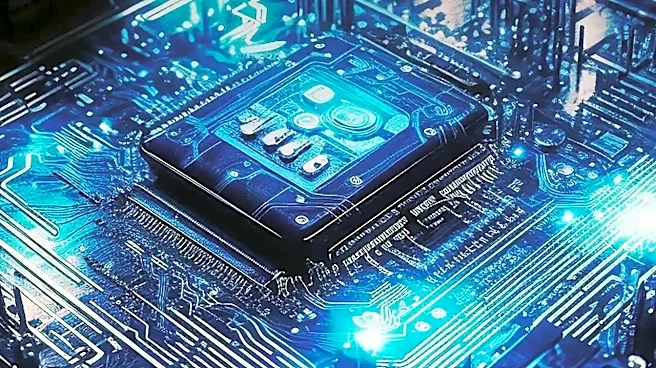
Think of your phone's main chip, or SoC, as a team of specialists. The CPU is the general manager, handling all sorts of tasks. The GPU is the graphics artist, rendering everything you see on screen. And the NPU, or Neural Processing Unit, is the AI specialist.
It's a processor designed specifically to handle the complex, repetitive math behind artificial intelligence tasks—like recognizing your face, translating a conversation in real time, or figuring out the best parts of a photo. By having a dedicated chip for this, phones can perform these smart tricks much faster and with dramatically less power consumption, which is key to preserving battery life. This isn't just about speed; it's about making advanced AI practical enough to run all day in your pocket.
The Big Deal Inside the Pixel 11's Tensor G6
Google's new Pixel 11 and 11 Pro are built around its latest custom chip, the Tensor G6. While benchmark scores for the CPU and GPU show it competing with other flagship phones, the real story is the upgraded NPU, which Google calls its Tensor Processing Unit (TPU). According to recent reports and spec analysis, the 5th-generation TPU inside the G6 boasts a 50% increase in raw compute capability and, crucially, double the memory bandwidth of its predecessor. This isn't just an incremental spec bump. Increased bandwidth is the key to unlocking more sophisticated AI models. It means the NPU can access and process data much faster, a bottleneck that has historically limited the complexity of AI that can run directly on a device without needing to connect to the cloud.
From Smarter Photos to a Smarter Phone
For years, the NPU's most visible job was in computational photography. It powered features like Night Sight and Portrait Mode. While the Pixel 11's new "Magic Capture" feature, which analyzes hundreds of frames to pick the perfect shot, is impressive, the new NPU power is aimed at something much bigger: true on-device, agentic AI. Google's demos hinted at this with features like "Call For Me," where the Gemini assistant can make phone calls to book appointments on your behalf. This kind of proactive AI requires an NPU that can run complex language models locally, ensuring both speed and privacy, since sensitive data doesn't have to be sent to a server. This move from reactive AI (editing a photo) to proactive AI (managing your tasks) is the single biggest shift in smartphones in a decade.
Why It Matters More Than the Demo
The flashy features in a product demo are designed to sell you a phone today. A better camera and a slicker design are easy to show off. But the investment in a more powerful and efficient NPU is about where Google is betting the entire industry is headed. By focusing on on-device AI, Google is building a phone that is more personal, more private, and potentially more useful over its entire lifespan. While competitors like Qualcomm are also boosting NPU performance, Google's strategy of co-designing its hardware and software gives it an edge in creating deeply integrated AI experiences. The NPU isn't just enabling a few new tricks; it's transforming the phone's operating system into an intelligent layer that anticipates your needs. That's a fundamental change that a 10-minute keynote demo can't fully capture, but it's the detail that will define the user experience long after the initial novelty of a new screen wears off.