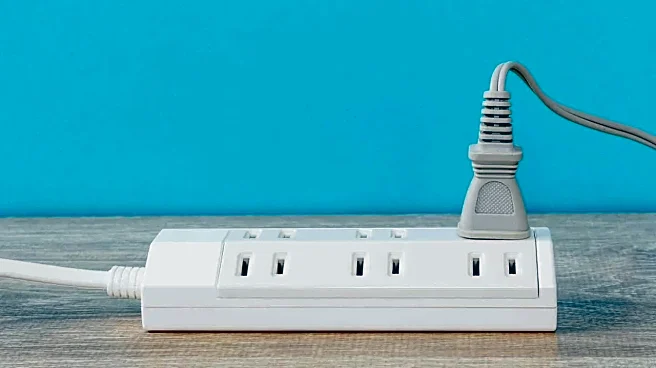




It’s Not Just a Power Strip
Let’s clear up the biggest misconception first: not all multi-outlet devices are surge protectors. A basic power strip is essentially an extension cord with more places to plug things in; it offers convenience, but no defense against electrical spikes.
A true surge protector contains internal components, called Metal Oxide Varistors (MOVs), designed to absorb and divert excess voltage away from your sensitive electronics. These voltage spikes can come from lightning strikes, power outages, or even large appliances cycling on and off inside your home. To tell the difference, look for a specific "joule" rating on the packaging or the device itself. No joule rating means no protection.
The Cardinal Sin: Daisy-Chaining
Plugging one surge protector into another, a practice known as “daisy-chaining,” is one of the most common and dangerous setup mistakes. It might seem like an easy way to get more outlets, but it creates a serious fire hazard. Each surge protector is rated for a specific electrical load, and chaining them together can overload the circuit, causing the protectors to overheat. This not only voids most manufacturer warranties but also significantly compromises the protective capabilities of the devices, leaving your electronics vulnerable. The National Electrical Code even prohibits the practice for these safety reasons. Always plug a surge protector directly into a properly grounded wall outlet.
Decoding the Joule Rating
The joule rating is the single most important number to understand. It tells you how much energy the surge protector can absorb before its protective components wear out. Think of it as a defensive shield with a set amount of health. A higher joule rating means it can take more hits—either many small ones or one large one—before it fails. For smaller items like lamps or clocks, a protector with 600 to 1,000 joules might be adequate. But for expensive and sensitive electronics like computers, home theater systems, and gaming consoles, you should look for a rating of 2,000 joules or higher. Investing in a higher rating provides a longer lifespan and more robust protection.
They Don’t Last Forever
This is the detail most people miss: surge protectors are disposable. Every time your protector absorbs a power surge, its internal MOVs degrade slightly. Over time, and after enough surges, that protective capacity is completely used up, and it effectively becomes a simple power strip, offering no further protection. Most experts recommend replacing your surge protectors every three to five years. However, if you live in an area with frequent thunderstorms or have experienced a major power event like a nearby lightning strike, you should replace them immediately, as their protective capacity may have been wiped out in a single event. Many modern protectors have an indicator light labeled "Protected" or "Grounded." If that light is off or flickering, it's a clear sign that the device is no longer shielding your electronics and needs to be replaced.
Smart Placement and Load Management
Where and how you use your protector matters. Never plug high-draw appliances like space heaters, coffee makers, or microwaves into a surge protector alongside your electronics. These devices can overload the circuit. A good rule of thumb is to keep the total amperage of connected devices about 20% below the protector's maximum rating (for a standard 15-amp protector, that's a 12-amp total load). Furthermore, ensure the surge protector is in a well-ventilated area to allow heat to dissipate. Covering it with a rug or pushing it tight against furniture can create a fire risk. Finally, just as you can't daisy-chain surge protectors, you also shouldn't plug them into a standard extension cord. For true protection, the device needs a direct, solid connection to a grounded wall outlet.