








A 'Regulated' Beginning
Launched in 2019, Binance USD (BUSD) was born from a partnership between the world's largest crypto exchange, Binance, and Paxos, a New York-based trust company. Its unique selling proposition was trust. Unlike other stablecoins with murky reserve details,
BUSD was issued by Paxos under the watchful eye of the New York Department of Financial Services (NYDFS). This meant every BUSD was backed 1:1 by U.S. dollars or equivalents, held in insured U.S. banks, with monthly audits to prove it. For a crypto world reeling from volatility, BUSD seemed like a safe harbor—a digital dollar with a regulator's stamp of approval. This made it a foundational asset not just for traders on Binance, but for the burgeoning world of decentralized finance (DeFi).
The Engine of an Ecosystem
While BUSD was available on Ethereum, its true power was unlocked on the Binance Smart Chain (now BNB Chain). Here, it became the lifeblood of a parallel DeFi universe. Frustrated by Ethereum's high transaction fees, users and developers flocked to BSC, where BUSD served as the primary stablecoin for trading, lending, and yield farming. Entire projects were built around it. If you wanted to participate in the explosive growth of platforms like PancakeSwap, you needed BUSD. At its peak, BUSD’s market capitalization soared past $23 billion, with a significant portion circulating within this ecosystem. It wasn't just another stablecoin; it was the central pillar supporting one of DeFi's most active and accessible networks, quietly funneling billions of dollars through its protocols.
The Regulatory Hammer Falls
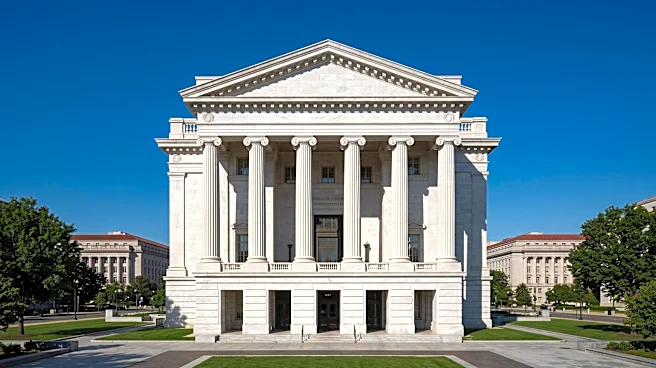
The very thing that gave BUSD its initial credibility—regulation—ultimately led to its demise. In February 2023, the NYDFS abruptly ordered Paxos to stop minting new BUSD. The regulator cited “unresolved issues” concerning Paxos’s oversight of its relationship with Binance. Simultaneously, the U.S. Securities and Exchange Commission (SEC) sent Paxos a notice, alleging that BUSD could be an unregistered security. The news sent shockwaves through the market. While Paxos assured that all existing BUSD would remain fully backed and redeemable through at least February 2024, the engine had been turned off. No new BUSD could be created, starting a slow, inevitable countdown for the stablecoin giant.
The Legacy: A More Cautious DeFi
The unwinding of BUSD fundamentally altered the DeFi landscape. Binance began gradually phasing out BUSD support, encouraging users to migrate to other stablecoins like FDUSD. This forced a massive reallocation of capital. The key takeaway for the industry was the stark reality of regulatory risk tied to centralized stablecoins. The fall of a “regulated” stablecoin shattered the illusion of safety, demonstrating that even fully-backed assets were vulnerable to the decisions of a single authority. This event accelerated the push for more truly decentralized stablecoins—those not dependent on a single company or jurisdiction. It also created a power vacuum, which was largely filled by Tether (USDT), ironically a stablecoin long criticized for its own transparency issues, increasing market concentration. BUSD's story served as a powerful, if painful, lesson in the fragility of centralized chokepoints within a decentralized world.