








The Old World: Counting Heads
For decades, the business model for software giants like Microsoft was beautifully simple. It was based on selling licenses, or 'seats'. Think of it like a movie theater: if a company has 1,000 employees who need to use Microsoft Office or Windows, it buys
1,000 seats. More employees meant more seats, which meant more predictable, recurring revenue. This per-user model fueled the software-as-a-service (SaaS) boom, creating a direct and easily scalable link between a customer's headcount and a vendor's income. The entire system was built on the assumption that the value of software scaled linearly with the number of people using it. It was one of the most successful business models ever created, but its foundation is now cracking under the weight of AI.
Enter the AI Agent: A Digital Workforce
An AI agent isn't just a chatbot or a clever feature inside an app. In this new context, an agent is an autonomous or semi-autonomous system that can perform complex tasks on its own. It can analyze data, manage customer service inquiries, write code, or run entire workflows without direct human supervision. One person might supervise a fleet of AI agents, or an agent might work continuously in the background, executing tasks that previously required a team of human users logged into various software applications. This fundamentally breaks the link between headcount and productivity. If one AI agent can do the work of ten employees, a company no longer needs those ten software seats to get the job done.
The New Math: Selling Value, Not Volume
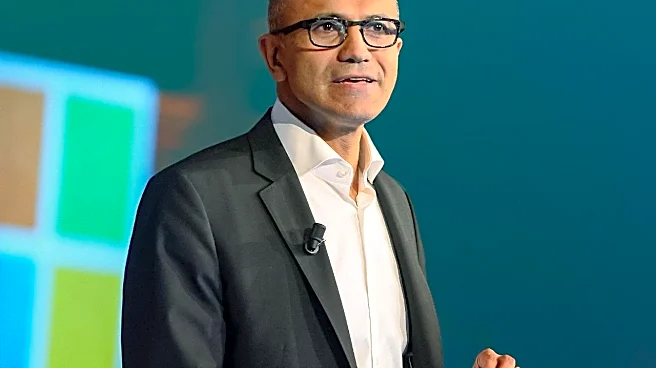
Here's where the paradox resolves. Microsoft isn't just selling access to a tool anymore; it's starting to sell the outcome the tool produces. The company is shifting to a hybrid model that combines a base per-user fee with consumption-based pricing for AI tasks. Microsoft CEO Satya Nadella has explicitly stated customers are moving "from the traditional seat model to seats plus consumption." With products like Copilot, a company might still pay for a human user's license, but the real money is in what the AI does. These tasks are often measured and billed using 'Copilot Credits', which are consumed based on the complexity of the work performed by the AI. An agent that saves a company millions by optimizing its supply chain is delivering far more value than ten employees using Excel, and Microsoft can price that value accordingly. This shifts the economic model from selling seats in the theater to charging for the value of the movie itself.
Where the New Revenue Comes From
While traditional seat revenue may stagnate or decline, Microsoft's income streams are diversifying. First, there's the high-margin AI add-on itself, like the $30-per-user monthly fee for Copilot for Microsoft 365, which sits on top of existing subscriptions. Second, and more significantly, is the consumption revenue. A company might find that its variable AI consumption costs eventually rival or exceed its fixed license fees, especially with heavy use. This usage-based model—charging for API calls, tokens processed, or tasks completed—ensures that as customers get more value from AI, Microsoft's revenue grows in lockstep. This model also protects Microsoft from the high infrastructure costs of running these powerful AI models, something a flat seat-based fee fails to do.
The Ripple Effect on Jobs and Budgets
This strategic pivot has clear consequences. For corporate budget planners, forecasting software costs is becoming much harder. The predictable cost of employee headcount is being replaced by the variable cost of machine activity. For the workforce, the trend is equally profound. As companies deploy AI agents to handle tasks previously done by humans, the demand for certain roles will inevitably change. An AI agent handling 75% of routine customer service tickets might mean a company can grow its customer base without hiring more support staff. While this boosts efficiency, it also signals a future where software value is decoupled from human labor, reshaping both IT budgets and the job market simultaneously.