






The Speed Isn't the Whole Story
The first thing you’ll see on a box of DDR5 RAM is a big, impressive speed number, like 6000 MT/s (megatransfers per second), which dwarfs the typical 3200 MT/s or 3600 MT/s of its DDR4 predecessor. The surprise? That higher number doesn't always translate
to a night-and-day difference in the real world. This is because of something called latency—the delay before the RAM actually starts sending data. Early DDR5 kits had high latencies that often negated their speed advantage. While newer kits have improved, the concept of 'true latency' (a calculation of speed and timings) shows that a high-quality DDR4 kit can be just as responsive as a mid-range DDR5 kit. For many applications, especially gaming at higher resolutions like 1440p or 4K where the graphics card does the heavy lifting, the performance gain from DDR5 can be minimal, sometimes as low as 1-5%.
A More Expensive Platform
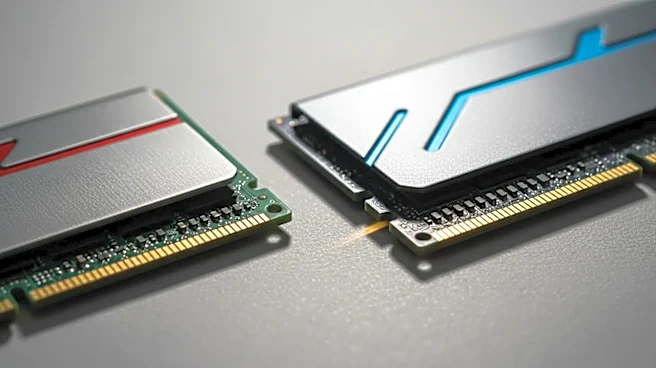
Here's the biggest surprise for most first-time builders: the cost of DDR5 isn't just in the RAM sticks themselves. DDR4 and DDR5 modules are physically different and are not interchangeable. You can't plug a DDR5 stick into a DDR4 motherboard, or vice-versa. As of 2026, all new CPU platforms from Intel (LGA1851) and AMD (AM5) require DDR5 memory, locking you into a specific ecosystem. This means choosing DDR5 necessitates buying a more modern—and typically more expensive—motherboard. While some older Intel platforms offered motherboards with either DDR4 or DDR5 slots, those are now legacy options. The actual cost of entry for DDR5 is the price of the RAM plus the price of the motherboard required to run it, a platform cost that is significantly higher than sticking with a mature and budget-friendly DDR4 setup.
The Shocking Viability of 'Old' Tech
Despite being the older standard, DDR4 is far from dead; in fact, for many users, it's the smarter financial decision. As of mid-2026, the price per gigabyte for DDR5 is still significantly higher than for DDR4. That price gap is widening due to supply shortages and manufacturing priorities shifting to server components, with recent reports indicating sharp price increases for both memory types, but especially DDR4 due to specific enterprise demands. For a gamer on a budget, the money saved by opting for a proven DDR4 motherboard and RAM can be reallocated to a more powerful graphics card or a larger SSD—upgrades that will provide a much more noticeable performance boost in most games than the jump from DDR4 to DDR5 would. Benchmarks consistently show that a well-tuned DDR4-3600 system can perform within 5-10% of a DDR5 system in many popular games, making it a surprisingly potent choice for value-conscious builders.
The Future-Proofing Fallacy
Many users justify the extra cost of DDR5 by calling it "future-proofing." The logic seems sound: buy the latest technology so your system stays relevant longer. The surprise is that this is often a poor investment strategy. Technology moves so quickly that by the time applications and games truly require the bandwidth that high-end DDR5 offers, the entry-level DDR5 kits available today will be considered slow and outdated. You'll likely want to upgrade again anyway. Instead of paying a premium for performance you can't fully use today, a more practical approach is to build a balanced system that meets your current needs and budget. For many first-time builders, that perfect balance is still found in the mature, affordable, and surprisingly capable world of DDR4, which continues to deliver excellent performance for everyday tasks and gaming.