
Before the Diffusion Boom
Not long ago, the world of generative AI was ruled by a different technology: Generative Adversarial Networks, or GANs. The core idea of a GAN was clever, pitting two neural networks against each other. One, the 'generator,' would create fake images,
while the other, the 'discriminator,' would try to tell them apart from real ones. This constant competition forced the generator to get better and better. GANs could produce impressive results, but they were notoriously difficult to work with. They were often unstable during training, prone to a problem called 'mode collapse' where they would only produce a very limited variety of outputs. Think of a chef who only learns to make one dish perfectly but can’t improvise. While GANs were fast, achieving both high quality and wide diversity was a constant struggle. This made them powerful but often impractical for many real-world applications that required nuance and control.
From Chaos Comes Creation
Diffusion models took a completely different, and arguably more intuitive, approach. Imagine taking a perfect photograph and slowly adding specks of digital 'noise' until it becomes an unrecognizable field of static. The 'forward diffusion' process does exactly this, learning how an image systematically decays into chaos. The real magic, however, happens in reverse. The AI model is then trained to undo this process—to look at a frame of pure static and meticulously remove the noise, step by step, until a clear image emerges. By learning to perfectly reverse the journey from image to noise, the model intrinsically learns the fundamental structure of what an image is. To generate something entirely new, you just give the model a fresh canvas of random noise and let its denoising process run. It’s less like a competition and more like a sculptor revealing a figure from a block of marble, except the block is pure static and the sculptor's tools are algorithms.
The AI Art Explosion
This new method proved to be a game-changer for stability and quality. The result was the explosion of text-to-image models like DALL-E, Midjourney, and Stable Diffusion that captured the public's imagination. These models could interpret complex, abstract text prompts and translate them into stunningly detailed and coherent images. Where GANs might have struggled with a prompt like "an astronaut riding a horse in a photorealistic style," diffusion models excelled. Their step-by-step refinement process allowed for greater control and fidelity, leading to the Cambrian explosion of AI-generated art. This leap in quality and ease of use is what put generative AI on the map for millions of people, turning a niche technical field into a mainstream cultural phenomenon.
The Quiet Revolution
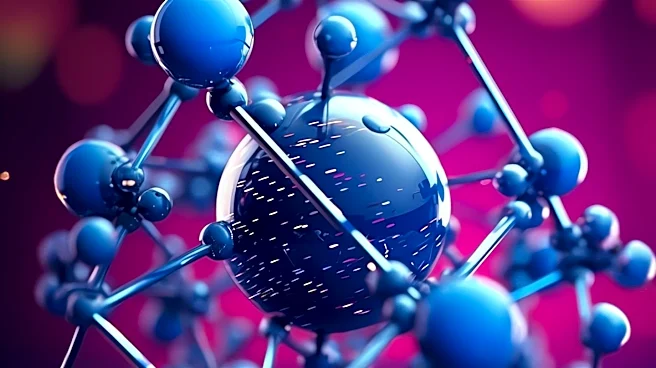
But the headline-grabbing images are only the beginning of the story. The true reshaping of AI is happening more quietly in labs and industries. Because the principles of diffusion aren't limited to pixels, they can be applied to almost any kind of data. In medicine, researchers are using diffusion models to design novel molecular structures, potentially accelerating drug discovery. In materials science, they can generate new compounds with desired properties. The same technology is being applied to create realistic audio for text-to-speech, compose music, and even generate high-fidelity video. This versatility is the real power of diffusion models. They provide a robust and flexible framework for generating complex, structured data of all kinds, well beyond the 2D canvas of a digital image. This has unlocked new possibilities in scientific research, engineering, and creative fields that were simply out of reach just a few years ago.