





The Trillion-Dollar Question
Is the artificial intelligence boom a sustainable technological revolution, or is it a speculative bubble fueled by hype? That’s the single biggest question hanging over the market. Since 2025, capital has poured into AI, with global spending projected
to top $2.5 trillion in 2026 alone. Companies are spending furiously to build the infrastructure for an AI-powered future, from data centers to the chips that power them. This spending has been a major driver of economic growth. But it also raises a critical point of concern: are companies building for real, durable demand, or are they caught in a cycle of speculation, spending money today on the hope of profits tomorrow? Nvidia's upcoming financial results are seen by many as the first concrete piece of evidence that could start to answer this question.
Ground Zero for the AI Boom
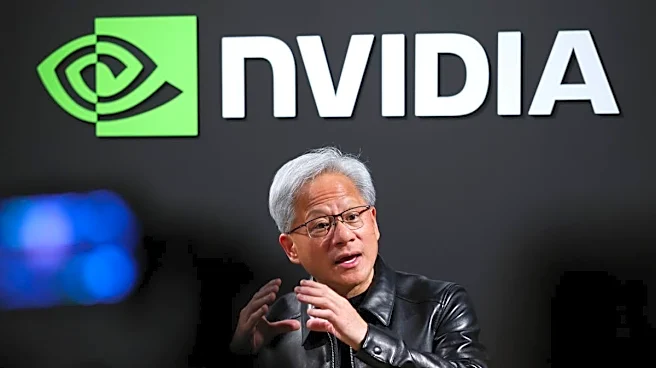
So, why does one company's performance carry so much weight? Because Nvidia isn't just a player in the AI boom; it's the primary arms dealer in the AI gold rush. The company’s powerful graphics processing units (GPUs) have become the essential hardware for training and running advanced AI models. Its dominance is so complete that its sales figures are considered a direct proxy for the entire industry's investment in AI. When giants like Microsoft, Google, Meta, and Amazon build out their massive AI data centers, a huge portion of that capital expenditure flows to Nvidia. Therefore, its revenue, particularly from its Data Center division, provides a clear, unfiltered look at whether the biggest players are still spending aggressively or starting to pull back.
The Numbers That Actually Matter
When the results are released, everyone will see the headline revenue and earnings-per-share figures. Wall Street expects revenue of around $92 billion for the quarter, which would represent staggering year-over-year growth of nearly 100%. But the smart money will be looking deeper at two specific areas. The first is Data Center revenue, which analysts project will be around $85.5 billion. This number needs to be strong to show that core AI demand remains robust. The second, and arguably more important, metric is forward-looking guidance. What the company projects for the next quarter is often more influential than past performance. Analysts are looking for guidance of over $100 billion to signal that momentum isn't just continuing, but accelerating. Any sign of caution could be interpreted as a crack in the AI growth story.
Two Futures: A Beat or a Miss
The stakes are incredibly high, and the market reaction will likely be swift. If Nvidia soundly beats expectations and, crucially, issues optimistic guidance for future quarters, it will be seen as a massive validation of the AI investment thesis. Such a result would likely not only lift Nvidia's stock but could also reignite a rally across the entire tech sector. However, the opposite is also true. Despite incredible growth, Nvidia's stock has shown recent weakness, falling for seven consecutive trading days leading up to the report. The bar for a positive surprise is incredibly high. If the company meets but doesn't significantly exceed expectations, or if its guidance is merely in line with projections rather than blowing them away, it could be perceived as a disappointment. A miss, or any hint that demand might be leveling off, could trigger a significant sell-off, validating the fears of those who believe the market is in a bubble.