


Escaping the Tyranny of the Spec Sheet
For decades, marketing has trained us to believe that bigger numbers are always better. More megapixels, higher DPI, faster processors. This created a 'spec sheet war' where victory is measured in technical benchmarks. While these numbers provide a baseline,
they fail to capture the full picture of how a device feels to use in the real world. This obsession with raw data often misses the very qualities that make a product enjoyable, leading buyers to overlook gems that are technically 'weaker' but offer a vastly superior experience. The most memorable products often win on feeling, not figures.
The Feel Factor: Build and Ergonomics
A spec sheet can't tell you how a controller will feel in your hands after a three-hour gaming session, or the satisfying 'thock' of a well-made mechanical keyboard. Premium materials, thoughtful ergonomic design, and tactile feedback—often called haptics—create a connection with the user that is purely experiential. This is the difference between a flimsy, plastic-feeling accessory and a solid, durable piece of equipment that feels like an extension of your own body. That confidence and comfort can contribute more to performance and enjoyment than a fractional improvement in response time.
Software Is the Secret Sauce
The most powerful hardware in the world can be rendered useless by a clunky, confusing, or slow user interface (UI). A gadget's software is the bridge between you and the technology. A seamless and intuitive UI makes a device a joy to use, while a poorly designed one introduces friction and frustration. Think of the Nintendo Switch: on paper, its processing power is significantly lower than its competitors, yet its snappy, user-friendly interface and the seamless transition between handheld and docked mode created an experience that has sold over 140 million units. The software experience simply works.
The Power of the Ecosystem
A single gadget rarely exists in a vacuum. Its true power is often unlocked when it connects seamlessly with other devices. This is the product ecosystem: a network of hardware and software from the same company designed to work together. When your headset, mouse, and keyboard all sync their lighting profiles with a single click, or when your game saves automatically sync from your console to your handheld, the value of each individual device increases exponentially. This integration creates a holistic experience that is far more valuable than the sum of its parts, encouraging brand loyalty and making the user's life easier.
The X-Factor: Immersion and Ambiance
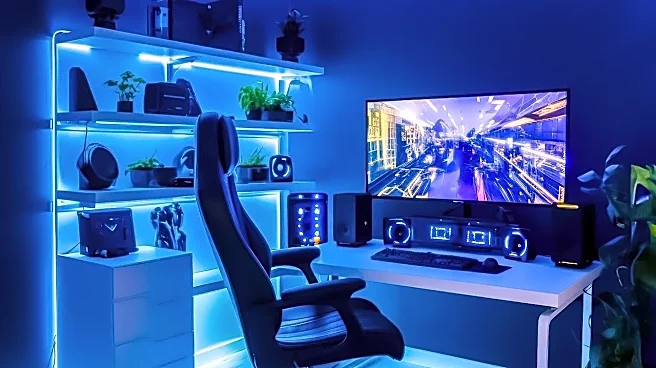
Finally, there are the gadgets whose entire purpose is to enhance the vibe. Ambient smart lighting that reacts to the colors on your screen, a high-fidelity headset that reveals subtle audio cues you never knew existed, or a gaming chair so comfortable it makes you forget you're sitting at all. None of these things will increase your frame rate. They won't show up on a performance chart. But they deepen immersion, reduce fatigue, and simply make your game room a more magical place to be. They prove that the best experiences are often the ones that can't be measured.