





The New Gold: Why Developers Matter
Forget flashy hardware launches. The most important currency in the artificial intelligence race is “developer mindshare.” It’s a simple concept: which platform are the smartest, most creative software engineers choosing to build on? An AI model, no matter
how powerful, is just a brain in a jar without developers turning it into useful, compelling applications. The company that captures their attention, effort, and creativity will ultimately own the user experience. This isn't just a fight for market share; it's a fight to define how AI integrates into our daily lives, and the spoils go to the platform that developers love, trust, and find most rewarding.
Apple's Playbook: The Polished Ecosystem
If Apple is selling a finished, polished car, OpenAI is selling a state-of-the-art engine that developers can put in anything from a go-kart to a spaceship. OpenAI’s DevDay events are the complete opposite of WWDC’s slick productions. They are for the hardcore engineer. The message is simple: “We have the most powerful models on the planet. Here are the keys (the API). Go build something amazing.” This API-first approach gives developers maximum flexibility. They can integrate GPT-4o or future models into any app, on any platform—iOS, Android, web, or a custom backend. OpenAI is betting that developers will gravitate toward the best-in-class technology and the freedom to innovate without the constraints of a single ecosystem. Their recent partnership with Apple is a testament to their strategy: they’re so confident in their engine that they’re willing to let it power a rival’s car.
OpenAI's Playbook: Raw, Unfiltered Power
Apple’s Worldwide Developers Conference (WWDC) is a masterclass in selling a vision. For years, the pitch was about building for the iPhone. Now, it’s about building for “Apple Intelligence.” Apple’s strategy isn’t to offer the absolute most powerful, boundary-pushing AI. Instead, it offers a deeply integrated, privacy-focused, and context-aware intelligence that just *works* across its billions of devices. For a developer, the appeal is immense: access to a massive, affluent user base that is already locked into the ecosystem. Apple provides the guardrails, the tools (like Swift and Xcode), and the App Store for distribution. The trade-off is control. Developers must play by Apple’s rules, but in return, they get a direct line to the pockets and home screens of a billion-plus users. Apple is betting that for most developers, seamless integration is more valuable than raw power.
Clash of Philosophies: Integration vs. Capability
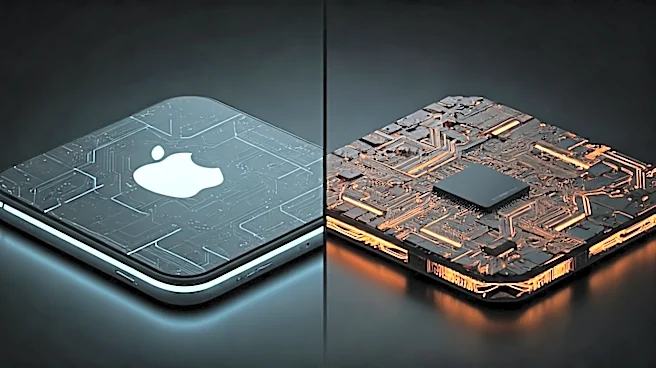
This boils down to a fundamental choice for a developer. Do you build for Apple, where the AI is “good enough” and pre-packaged for a billion users? Or do you build with OpenAI, where you get cutting-edge power but have to handle the integration, user interface, and distribution yourself? It’s a classic battle between a vertically integrated walled garden and an open, horizontal platform. Apple offers ease-of-use and incredible market access. OpenAI offers pure capability and freedom. A developer building a simple, helpful AI-powered note-taking feature might choose Apple’s native tools. A startup trying to build a revolutionary new AI-first service will almost certainly start with OpenAI’s APIs.
The Road to 2026: A Long-Term War
The headline's mention of 2026 is less a prediction and more a symbol of the long game. This war for developer mindshare won't be won in a single year. By 2026, we’ll have a much clearer picture of which strategy is paying off. Will Apple’s on-device intelligence become so good that most developers don’t need outside APIs? Or will OpenAI’s models advance so rapidly that Apple Intelligence looks like a quaint toy? The real battle will be fought in the evolution of their platforms. If Apple opens its ecosystem more, it could become unbeatable. If OpenAI builds better tools and developer-friendly business models, it could become the undisputed foundation of the new internet. The choices developers make today are long-term bets on which of these futures they believe in.