





The Current State of Apple Intelligence
Since its introduction, Apple Intelligence has operated on a hybrid model. Many tasks, like summarizing notifications or generating 'Genmoji,' happen directly on your device, leveraging the power of the A-series chips. This on-device processing is fast,
efficient, and, most importantly, private. But for more complex requests—like summarizing a long document or performing advanced searches—your iPhone hands the task off to a system called Private Cloud Compute. This system uses Apple's own servers, powered by Apple silicon, to do the heavy lifting. While Apple promises this handoff is secure and your data is never stored, it's still a compromise. It's an admission that, for now, the most powerful AI requires the cloud.
The On-Device Dream
In a world where competitors are building massive, cloud-based AI models that consume user data for training, Apple has staked its reputation on a different path. The company’s brand is built on privacy, and the ultimate goal for Apple Intelligence is to run almost entirely on the device you hold in your hand. Doing so would offer unmatched security and responsiveness, making AI feel like a natural extension of the hardware rather than a service you're borrowing from a server farm. It would be a powerful differentiator, reinforcing the idea that your personal information stays personal. This device-native approach is the holy grail for Apple's AI, a vision where your most personal context is understood by a machine that never shares its secrets.
The Silicon Barrier
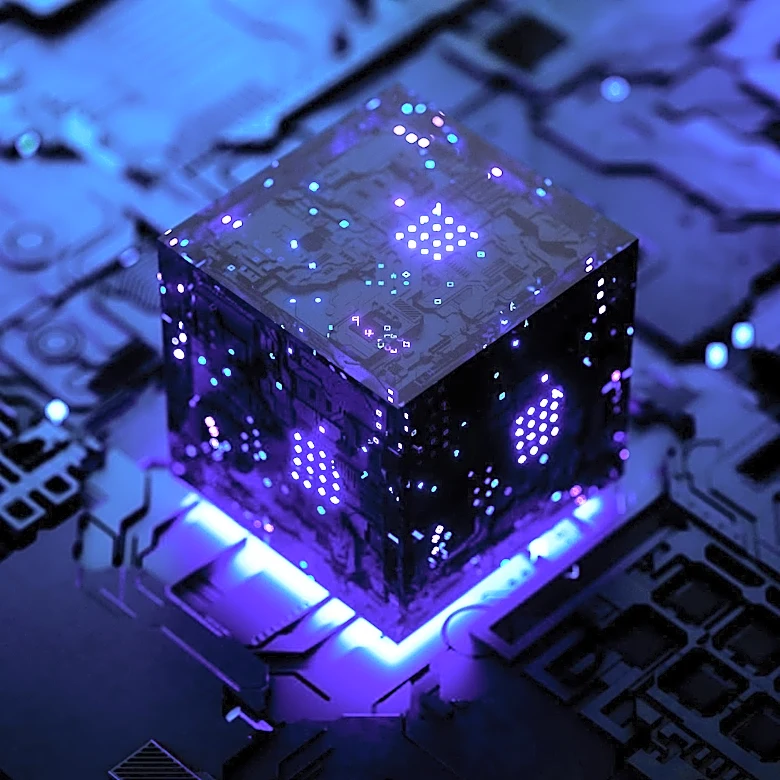
The ambition to run powerful generative AI models locally is enormous, but so is the technical hurdle. Truly capable large language models require immense computational power and memory—resources that are scarce on a battery-powered smartphone. This is where the iPhone 18's processor, expected to be the A20 Pro, enters the picture. Rumors suggest it will be Apple's first chip built on a next-generation 2-nanometer process, offering significant boosts in speed and power efficiency. More than just raw speed, the new chip architecture and a rumored increase in RAM to 12GB are critical for feeding data to AI models faster and more efficiently than ever before. The iPhone 18's silicon isn't just an incremental upgrade; it’s being purpose-built to overcome the on-device AI barrier.
Why the iPhone 18 Is the Tipping Point
This is why the upcoming launch is so critical. The iPhone 18 represents a fork in the road for Apple's AI strategy. If the A20 Pro chip and its supporting hardware deliver the breakthrough in performance that analysts expect, we could see a significant expansion of on-device Apple Intelligence features. This would validate Apple's privacy-first approach and set a new standard for personal computing. However, if the hardware leap isn't big enough, it may signal that the dream of a truly device-native AI is still years away. It could force Apple to rely more heavily on its Private Cloud Compute—and potentially third-party models like Google's Gemini—to keep pace with the rapidly evolving AI landscape. The capabilities of the iPhone 18 will, therefore, serve as a clear verdict on whether Apple's hardware can finally catch up to its ambitious AI software vision.