






Surprise 1: The Charger Is Often the Cheapest Part
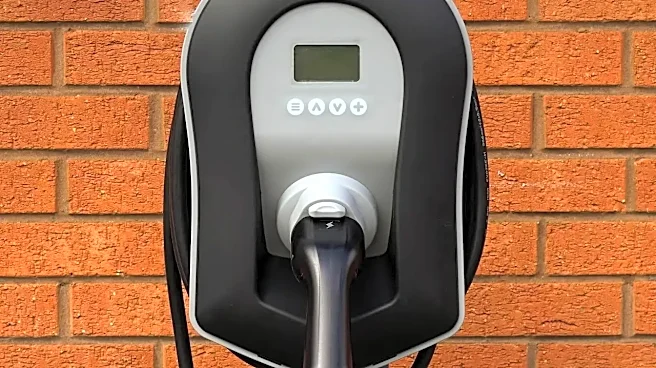
The first surprise for many new owners is that the price of the charger itself is just the beginning. The real cost often lies in the installation. Getting a Level 2 charger like the ChargePoint Home Flex up and running requires a dedicated 240-volt circuit,
the same kind your clothes dryer uses. Depending on your home’s electrical panel and garage location, the cost for a licensed electrician to run the wiring and install the outlet or hardwire the unit can range from several hundred to even thousands of dollars. A typical installation might cost between $1,200 and $3,500. If your electrical panel is old or at capacity, you could be looking at an additional panel upgrade, pushing the total cost well beyond the initial price of the charger.
Surprise 2: The ‘Smart’ Features Actually Save You Money
Many people assume the "smart" features are just marketing fluff, but this is a pleasant surprise. The ChargePoint app allows you to schedule your charging sessions. This is a huge deal if your utility offers time-of-use (TOU) electricity rates, where power is significantly cheaper overnight. By setting your car to charge only during these off-peak hours, the charger can pay for itself in savings over time. Some utilities even offer special rebates or monthly credits for customers who use certified smart chargers like the Home Flex, allowing the power company to slightly adjust charging during peak demand to stabilize the grid. Suddenly, your charger isn't just a convenience; it's an active tool for managing your home energy costs.
Surprise 3: You'll Become a Data Nerd
Before owning an EV, you probably didn't think much about your kilowatt-hour (kWh) usage. The ChargePoint app changes that. It provides a detailed history of every charging session, both at home and at public stations. You can see exactly how much energy you've used, the cost of each session, and the miles you've added. This transparency turns abstract energy consumption into tangible data. First-time users are often surprised by how this data empowers them, helping them track their transportation budget with precision and understand the real-world efficiency of their vehicle in different seasons.
Surprise 4: The App Is Your All-Access Pass
When you buy a ChargePoint home charger, you're not just getting a piece of hardware; you're buying into an entire ecosystem. The same app you use to manage your home charging is your key to one of the largest public charging networks. This is a significant surprise and benefit that isn't always obvious at purchase. You can use the app to find public chargers, see if they're available in real-time, start a session, and handle payment. This integration simplifies the entire EV experience, as you don't need to juggle multiple apps and accounts for home versus public charging. It creates a seamless flow from your garage to the open road.
Surprise 5: Rebate Roulette Is Confusing but Worth It
Navigating the world of EV incentives can feel like a game of chance. There are federal tax credits, state rebates, and local utility programs, and they all have different rules and expiration dates. For example, a federal credit for 30% of the cost up to $1,000 was available for equipment placed in service by mid-2026. Meanwhile, your local power company might offer a $500 rebate specifically for buying a Wi-Fi-connected charger like the Home Flex. The surprise for most is the amount of paperwork and research required. However, the effort is almost always worth it, as stacking these incentives can dramatically reduce the total out-of-pocket cost for both the charger and its installation.