




The Dawn of 'Apple Intelligence'
Apple’s ambitious push into artificial intelligence isn't just about software magic. It's about a looming war with physics, set to come to a head by 2026, where the battlefield is the tiny lithium-ion battery inside every iPhone. At its recent developer
conferences, Apple has laid out a careful, privacy-focused vision for AI. Dubbed 'Apple Intelligence,' the strategy is quintessentially Apple: make complex technology feel simple, personal, and secure. A key part of this is performing as much AI processing as possible directly on your device—the iPhone, iPad, or Mac. This 'on-device' approach is faster, works offline, and keeps your personal data from being beamed to a server farm in another state. It’s what allows Apple to build AI that knows *you*—your schedule, your photos, your messages—without being creepy. But this elegant solution comes with a hidden, and very physical, cost.
AI's Insatiable Appetite for Power
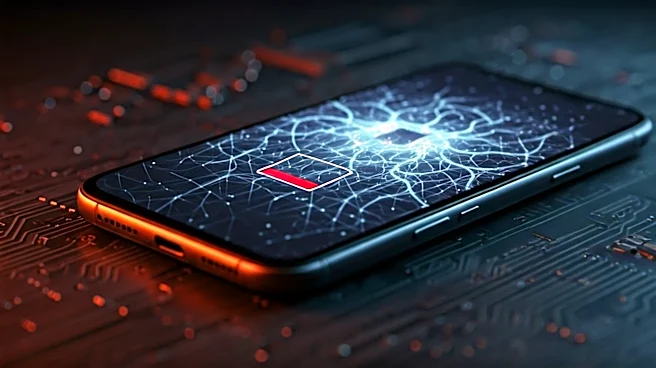
Think of your iPhone's processor as an engine. Browsing the web is like cruising on the highway; it’s efficient. Playing a high-end 3D game is like flooring it on a racetrack; it burns fuel and generates a lot of heat. Running a sophisticated AI model is like that racetrack experience, but sustained. These models require billions of calculations per second. Every calculation consumes a tiny slice of battery and produces a tiny puff of heat. When you multiply that by the trillions, you get a device that gets warm to the touch and a battery icon that turns red far sooner than you’d like. This isn’t a software bug Apple can patch; it's a fundamental constraint of thermodynamics. And as AI models get smarter and more capable, their appetite for power is only going to grow.
The On-Device vs. Cloud Dilemma
Apple is trying to find a delicate balance. Its system intelligently decides whether a task is simple enough for the device or needs the heavy-lifting power of the cloud. This hybrid model is clever, but it creates its own tension. The most 'magical' AI features—the ones that will truly feel like science fiction—will inevitably require the most processing power. As competitors like Google and OpenAI push for ever-more-powerful cloud-based AI, Apple will face pressure to keep up. But every time it adds a feature that requires more on-device horsepower to maintain its privacy promise, it puts another metaphorical brick on the back of its battery. By 2026, the AI models we consider cutting-edge today will look quaint. The models of the future will demand more, and Apple will have to decide how much battery life it’s willing to sacrifice at the altar of AI.
Why 2026 is the Symbolic Deadline
The year 2026 isn't a magical date, but a symbolic marker for when this simmering problem boils over. Battery technology improves at a notoriously slow pace—a few percentage points a year, if we’re lucky. There is no 'Moore's Law' for batteries on the horizon. Meanwhile, AI capability is exploding exponentially. The gap between what the software *can* do and what the hardware can *sustainably* do is widening every day. By 2026, Apple will likely want to roll out truly proactive, ambient AI that anticipates your needs before you do. Imagine an AI assistant that constantly analyzes your surroundings through the camera and microphone to offer real-time help. The feature would be incredible. The battery drain would be catastrophic. This is the collision course.
Apple’s Three Difficult Paths Forward
Facing this challenge, Apple has a few potential paths, none of them easy. First, it could achieve an unforeseen breakthrough in chip efficiency with its M-series and A-series silicon, making its processors radically more powerful without a corresponding energy cost. This is its best bet, but it's a monumental engineering challenge. Second, it could hope for a miracle in battery chemistry, which is unlikely to arrive on a mass-market timeline. The third, and most likely, path is one of compromise. Apple may have to draw a harder line in the sand, limiting the most powerful AI features to its 'Pro' models, which have larger batteries, or even making them opt-in features with clear warnings about battery impact. It would be a rare admission from Apple that its technology has a significant, user-facing trade-off, potentially denting its 'it just works' brand ethos.