





A World of Digital Dinosaurs
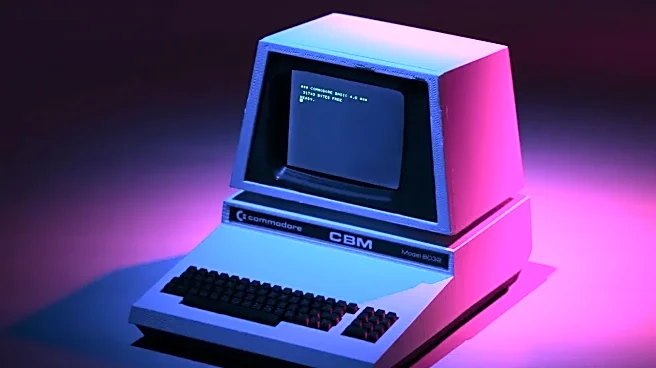
To understand the scale of Dennis Ritchie's gamble, you have to picture the world of computing in the late 1960s. Computers were monolithic beasts, the size of rooms, jealously guarded by corporations and universities. Each machine was a digital island
with its own unique architecture. Software was painstakingly written for a single type of hardware in what's known as assembly language—a low-level, machine-specific dialect. If a company bought a new computer, all its existing software was instantly obsolete. The idea that an operating system—the very soul of a computer—could be portable from one machine to another was not just impractical; it was considered nonsensical. The prevailing wisdom was that for an operating system to be fast and efficient, it had to be intimately and permanently tied to the specific hardware it ran on.
The Heretical Idea of Portability
Working in the quiet, academic halls of Bell Labs, Ritchie and his collaborator Ken Thompson were coming off a frustrating project called Multics. It was an ambitious attempt at a time-sharing operating system, but it grew too complex and unwieldy. Taking what they learned, they decided to build something simpler and more elegant on a small, leftover PDP-7 minicomputer. This became Unix. Herein lay the bet: they wanted to write their new operating system in a "high-level" programming language. At the time, this was heresy. High-level languages were for applications, not the core of the machine. The conventional belief was that the code produced by a compiler would be too slow and inefficient for the critical tasks of an OS. But Ritchie and Thompson had a vision that transcended a single machine. They were betting that software, even an entire operating system, should be decoupled from hardware. They were betting on portability.
Forging a Language to Win the Bet
There was just one problem: the perfect language for their audacious goal didn't exist. So, Dennis Ritchie built one. Building on Thompson's earlier language, called 'B', Ritchie created 'C'. C was a masterpiece of pragmatism. It was a high-level language that gave programmers the expressiveness and simplicity they needed, but it also provided the low-level control necessary to interact directly with computer memory and hardware—a crucial requirement for writing an operating system. It was the perfect tool for the job because it was designed specifically for that job. In 1973, in a move that would change computing forever, Thompson and Ritchie rewrote the Unix kernel in their new language, C. They had not only made a bet on portability; they had forged the very tools needed to win it.
How the Gamble Paid Off
The result was revolutionary. Suddenly, the Unix operating system could be moved, or "ported," to different computer platforms with a fraction of the effort previously required. Instead of rewriting the entire system from scratch for new hardware, developers only needed to write a C compiler for that hardware, and the vast majority of the Unix code would run with little to no modification. This decoupling of software from hardware was the ultimate payoff. Bell Labs, under a consent decree that kept it out of the computer business, began licensing Unix to universities for a nominal fee. Students and researchers fell in love with its simplicity and power, and as they graduated and entered the workforce, they brought the philosophy of Unix and the C language with them. The bet on portability and an elegant, powerful language had created not just a product, but a movement.
A Legacy Written in C
That single, foundational bet is now the bedrock of modern technology. The principles of Unix and the C language live on in virtually every major computing platform today. Linux, the operating system that powers the vast majority of the internet's servers and Android phones, is a direct descendant of Unix. Apple's macOS and iOS are also built on a Unix-like foundation. The C language itself remains one of the most widely used and influential programming languages in the world, forming the basis for other languages like C++ and influencing countless more. The hidden bet was that simplicity, elegance, and portability were more important than raw, machine-specific performance. It was a wager that empowering programmers with better tools would ultimately create a richer, more interconnected digital world than anyone in the 1970s could have imagined.