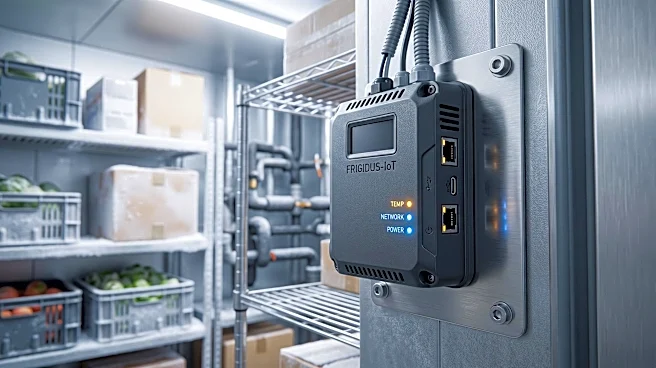








The Great Fridge Debate
A recent security operation in the United Kingdom has ignited a classic friction point in the cybersecurity world. The issue involves Resource Data Management (RDM), a British firm that produces refrigeration controllers used extensively in supermarkets,
warehouses, and restaurants. Researchers discovered a vulnerability in these controllers that could potentially allow unauthorized access, prompting a massive, coordinated effort by government agencies like the NCSC and the Food Standards Agency to pull thousands of devices offline or secure them manually. While the immediate threat was mitigated, the fallout has left experts divided on what this incident actually tells us about the state of Internet of Things (IoT) security.
The Physical Access Argument
At the heart of the disagreement is a fundamental question: How hard is it to actually exploit this flaw? RDM executives have argued that the vulnerability is not as severe as researchers claim because exploiting it requires physical access to the hardware. In their view, an attacker cannot simply sit in a coffee shop and take over a supermarket's freezer remotely; they would need to physically touch or manipulate the controller. This 'physical barrier' is often used by manufacturers to downplay risk, suggesting that the sheer difficulty of getting hands-on with every device makes a mass attack unlikely.
The Researcher Counter-Strike
Security researchers, including those from Pen Test Partners, aren't buying that argument. Their logic is simpler and more pragmatic: if you can buy the hardware on eBay for a few pounds, you have 'physical access.' In the modern era, an attacker doesn't need to break into a specific warehouse to learn how to crack a controller. They can buy one unit, study it in a lab, find the weak password or hardcoded credential, and then use that knowledge to target any device of that model across the globe. To a researcher, once a flaw is understood via one piece of hardware, the physical barrier effectively evaporates, turning a local problem into a scalable digital one.
Why This Matters for Your Network
This isn't just an academic spat between engineers; it highlights why IoT devices are such massive blind spots for modern security. Most people think of their 'connected devices' as laptops or smartphones—things they actively manage. But refrigeration controllers, smart thermostats, and industrial sensors often live in a different layer of infrastructure. They are frequently managed by facilities teams or third-party contractors rather than IT departments. When these devices are connected to a network with weak credentials or unpatched firmware, they become perfect entry points. An attacker doesn't just want to mess with your temperature settings; they want to use your fridge as a stepping stone to reach your routers, servers, or sensitive data.
The Patching Paradox
Even when manufacturers like RDM release patches, we hit what experts call 'the patching paradox.' Unlike your phone, which nudges you to update every week, industrial or appliance-grade IoT devices are rarely designed for seamless remote updates. Some might not support them at all; others require manual intervention that busy technicians might skip. This creates a long tail of vulnerability where even after a fix is released, thousands of devices remain exposed for months or even years, waiting for someone to realize they need an update.