







The Hunt for Stability in a Wild Market
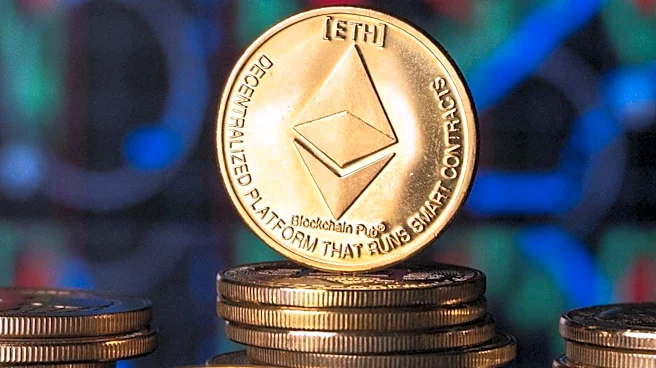
Decentralized finance promised to rebuild the financial world without intermediaries, but it had a core problem: its native currencies, like Bitcoin and Ethereum, are notoriously volatile. Using them for borrowing, lending, or payments was like trying
to build a house on shifting sand. A loan taken out in the morning could be drastically more expensive to repay by the afternoon. This volatility made it nearly impossible to build complex financial applications. DeFi needed an anchor—a reliable store of value and medium of exchange that wasn't subject to wild price swings. This created a huge demand for a crypto asset that behaved more like cash.
The Simple Genius of a Digital Dollar
Enter the fiat-backed stablecoin. The concept is straightforward: a company holds one U.S. dollar (or a cash equivalent like a short-term Treasury bill) in a regulated bank account for every one digital token it issues on a blockchain. This creates a token, such as Tether (USDT) or USD Coin (USDC), that is pegged 1:1 to the dollar. These digital dollars effectively act as a bridge between the traditional financial system and the burgeoning world of DeFi. They combine the stability of government-issued currency with the speed, global reach, and programmability of a crypto asset, allowing value to move across borders in minutes, 24/7.
The Fuel for the DeFi Engine
With a stable unit of account, DeFi exploded. Stablecoins became the dominant asset across the ecosystem. On decentralized exchanges (DEXs), they are the most common trading pair, allowing users to move in and out of volatile assets without having to cash out to a bank. In lending and borrowing protocols, they are the preferred asset for both providing collateral and taking out loans, ensuring predictability for both sides of the transaction. This predictable value also unlocked "yield farming," where users provide liquidity to DeFi protocols in the form of stablecoins to earn rewards. In essence, stablecoins became the base layer of liquidity and the primary collateral that underpins much of the DeFi world.
The Centralized Heart of a Decentralized World
Herein lies the great irony. The world of decentralized finance, built on the premise of removing central points of control, is now deeply reliant on centralized, fiat-backed stablecoins. Issuers like Circle (for USDC) and Tether (for USDT) are private companies that manage the reserves backing their tokens. This introduces counterparty risk: users must trust that these entities are maintaining adequate, liquid reserves. It also introduces regulatory and censorship risk. Because the issuers are centralized, they can be compelled by law enforcement to freeze funds or block addresses, a power they have used in the past. This has created a fundamental tension between DeFi's decentralized ideals and its practical dependence on these dollar-pegged, centrally-managed assets.