








The Promise of ‘Apple Intelligence’
At its recent Worldwide Developers Conference, Apple finally laid its AI cards on the table. “Apple Intelligence” isn't a single product but a suite of features woven into iOS, iPadOS, and macOS. It can summarize emails, generate images, and make Siri
dramatically more useful. Crucially, Apple's approach is a hybrid model. Simpler tasks are handled on-device using the power of Apple Silicon, preserving privacy. More complex requests are sent to “Private Cloud Compute”—new, dedicated servers using Apple chips. For anything beyond its own capabilities, like complex world knowledge queries, Apple is integrating third-party models, starting with OpenAI’s ChatGPT. This strategy is clever and cautious. It leverages Apple’s hardware strengths for privacy and performance on everyday tasks while outsourcing the heaviest lifting for now. But “for now” is the key phrase. This initial rollout is a carefully managed beta test, available only on the newest devices and in limited capacity. It’s the foundation, not the skyscraper.
The Two-Year Countdown
So why is 2026 the year to watch? It comes down to Apple’s famously methodical, long-term product cycles. Building a global, robust, and truly private AI infrastructure from the ground up is not a one-year project. The 2024 announcement was a declaration of intent; the next two years are for execution. This timeline gives Apple the runway it needs to complete several monumental tasks simultaneously.
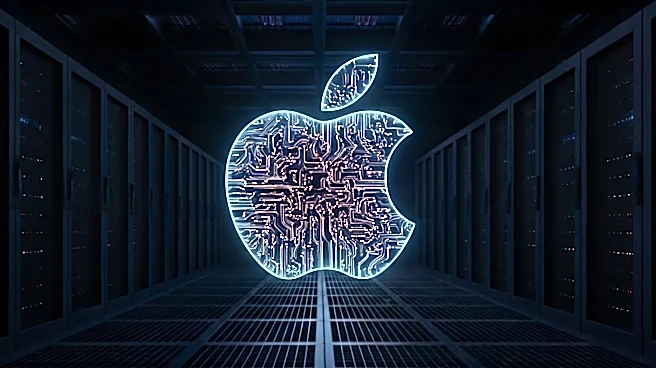
First, it has to physically build out its data centers with its own custom server silicon, a project reportedly codenamed “ACDC” (Apple Chips in Data Centers). This is a massive capital and engineering investment aimed at reducing reliance on partners like Google and creating a more secure, efficient backbone. Second, it needs to mature its software. The initial version of Private Cloud Compute needs to be scaled, hardened, and prepared to handle not just millions, but potentially billions of users worldwide. Third, it allows the hardware ecosystem to catch up, ensuring a much larger percentage of users have devices powerful enough to run the on-device components of Apple Intelligence smoothly.
The Infrastructure Gauntlet
The “defining test” in 2026 won’t be about a slick new user-facing feature. It will be a test of raw infrastructure. For years, Microsoft, Google, and Amazon have been locked in an arms race to build the cloud infrastructure that powers the current AI boom. Apple is now entering that same race, but with a handicap and a secret weapon. The handicap is that it's starting from a less mature position in large-scale cloud services. The secret weapon is its vertical integration and privacy-first brand promise.
By 2026, Apple’s infrastructure must prove it can do three things at an unprecedented scale. It must be powerful enough to compete with the raw intelligence of Google’s and Microsoft’s models. It must be efficient enough to be cost-effective for Apple. And most importantly, it must be secure and private enough to validate the core marketing message that your data isn’t being hoovered up to train a faceless corporate AI. If the system is slow, buggy, or suffers a single major privacy breach, the entire strategy is compromised.
Winning Over the Developers
Ultimately, the success of any Apple platform is measured by its developer ecosystem. WWDC is, after all, a developer conference. The real test at WWDC 2026 won’t just be Tim Cook on stage demonstrating a new trick in the Photos app. It will be the moment Apple provides developers with the APIs and tools to build their own apps on top of Apple Intelligence.
Will developers be able to easily integrate powerful AI features into their apps using Apple’s infrastructure? Will the platform be reliable and fast enough for them to bet their businesses on it? Can Apple convince them that its walled garden is a safer, more lucrative place to build AI experiences than the open fields of its competitors? Answering “yes” to these questions is the final boss of Apple's AI challenge. It's the point where Apple Intelligence transitions from a set of features into a true platform—the kind that defines the next decade of computing.