





It’s Not Just Another Bitcoin
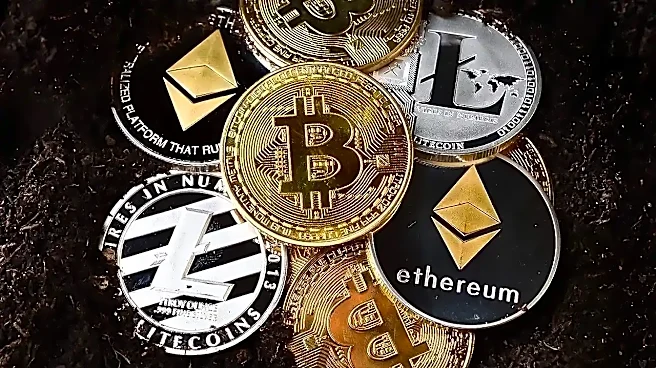
The first and most fundamental error is seeing Ethereum as a simple alternative to Bitcoin. While both are built on blockchain technology, their goals are entirely different. Bitcoin was created to be a decentralized store of value and a peer-to-peer
payment system—often called “digital gold.” Its purpose is finite and focused. Ethereum, on the other hand, was designed as a global, programmable platform. Think of it less like digital cash and more like a decentralized world computer. Its real innovation is the support for “smart contracts”—self-executing agreements that allow developers to build decentralized applications (dApps) for everything from finance (DeFi) and gaming to digital art (NFTs). Investing in Ethereum isn't just a bet on a currency; it's a bet on an entire ecosystem of applications and services being built on its foundation.
Forgetting About the 'Gas' Bill
Every action on the Ethereum network, from a simple transfer to a complex interaction with a decentralized finance app, requires computational energy. That energy isn't free. Users pay a fee, known as “gas,” to compensate network participants for validating their transactions. These fees are paid in Ethereum's native token, Ether (ETH). This is a critical distinction many investors miss. Unlike a stock or even Bitcoin, ETH has inherent utility within its own ecosystem. It's the fuel that powers the entire network. When network demand is high, gas fees can spike, making some transactions expensive. This economic mechanism not only prevents spam on the network but also creates a constant demand for ETH, directly tying its value to the network's utility and traffic. Ignoring the role of gas is like trying to understand the airline industry without considering the price of jet fuel.
Underestimating 'The Merge'
In September 2022, Ethereum underwent a massive software update known as “The Merge.” This event transitioned the network from a “Proof-of-Work” (PoW) system, like Bitcoin's, to a “Proof-of-Stake” (PoS) system. Many investors saw this as a mere technical tweak, but it was a fundamental reinvention with massive investment implications. The switch cut Ethereum's energy consumption by over 99%, addressing major environmental concerns. More importantly, it changed the network's entire economic model. Instead of energy-intensive mining, the network is now secured by “validators” who stake their own ETH to approve transactions and earn rewards. This process, known as staking, effectively allows ETH holders to earn a yield, similar to a bond or dividend-paying stock. The Merge also significantly reduced the rate at which new ETH is created, with some analysts suggesting it could make the asset deflationary over time as more ETH is 'burned' (removed from circulation) through transaction fees than is issued as rewards.
Viewing It as a Finished Product
A final mistake is treating Ethereum as a static, finished technology. In reality, it is a constantly evolving project with a public roadmap of future upgrades designed to improve its scalability, security, and functionality. After The Merge, developers are working on subsequent phases with names like “The Surge,” “The Verge,” and “The Purge,” each targeting specific limitations like high gas fees and transaction speeds. This ongoing development presents both opportunities and risks. On one hand, successful upgrades could dramatically increase the network's value and usability. On the other, it means investors are buying into a project that is still, in many ways, under construction. Understanding that Ethereum is a long-term, dynamic venture rather than a fixed asset is crucial for aligning investment expectations with reality. The platform's greatest strengths may still be in its future.