





The Symmetric Key: A Shared Secret
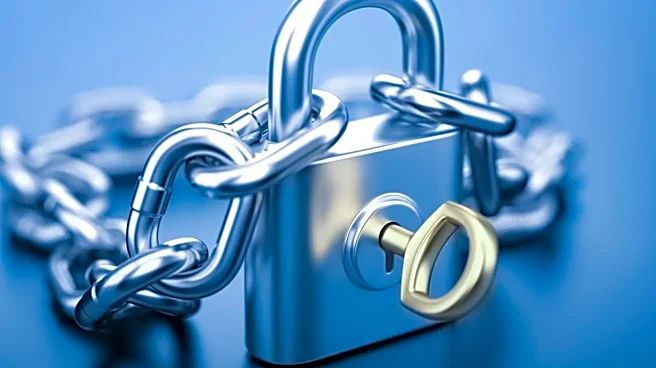
Think of symmetric encryption like a house key. Anyone who has a copy of that specific key can unlock the front door and get inside. In the digital world, this means a single, shared secret key is used to both encrypt (scramble) and decrypt (unscramble)
information. The sender and receiver must both have the exact same key. The most popular and trusted algorithm for this today is the Advanced Encryption Standard (AES), used by governments and businesses globally to protect massive amounts of data. The biggest advantage here is speed. Because the mathematical process is less demanding, symmetric encryption is incredibly fast and efficient, making it perfect for encrypting large files or continuous streams of data, like a movie you're streaming or the contents of your hard drive. But its greatest strength is also its biggest weakness: you have to securely share the key in the first place. If you have to send the key over an unsecured channel, anyone who intercepts it can read all your secret messages.
The Asymmetric Key: A Public Mailbox
Asymmetric encryption solves the key-sharing problem with a clever trick. Instead of one key, it uses a pair of mathematically linked keys: one public, one private. Think of it like a personal mailbox. You can give the location (the public key) to anyone. People can use it to drop off letters (encrypted data) for you. But only you have the specific key (the private key) to open the mailbox and read the letters. Even the person who dropped the letter off can't open it back up once it's inside. Your public key is for encrypting data, while your private key is for decrypting it. This is fantastic for security because you never have to share your private key. The downside? All this complex math makes asymmetric encryption significantly slower than its symmetric counterpart. You wouldn't want to use it to encrypt a huge database; it would be too resource-intensive and take far too long.
The Real-World Twist: It's a Partnership
So, if symmetric is fast but hard to share keys for, and asymmetric is secure for sharing but slow, what does the modern internet use? The answer is both, in a beautiful, coordinated dance. This is the part that isn't so simple. When you visit a secure website (one with "https" and a padlock icon), your browser and the server perform something called a TLS/SSL handshake. Here’s how they use their complementary strengths: First, your browser uses the website’s public key (asymmetric) to securely send a brand-new, single-use symmetric key that it just created. Because it's encrypted with the public key, only the website's server can decrypt it using its private key. Now, both you and the server have a shared secret key, and it was exchanged safely. From that point on, for the rest of your browsing session, all the data—the articles you read, the forms you fill out—is encrypted and decrypted using that much faster symmetric key.
Why This Complexity Matters
This hybrid approach gives us the best of both worlds: the high security of asymmetric encryption for the crucial, initial key exchange, and the high speed of symmetric encryption for the heavy lifting of bulk data transfer. It’s not a case of symmetric versus asymmetric, but symmetric and asymmetric working in tandem. This layered complexity is the backbone of secure e-commerce, private messaging apps, VPNs, and virtually every other secure interaction you have online. The simple one-key-versus-two-keys explanation is just the entry point into a much more intricate and elegant system. The real genius lies not in choosing one method over the other, but in knowing precisely how to combine them to create a system that is both robustly secure and highly efficient.