


What Exactly Is Private Cloud Compute?
Private Cloud Compute (PCC) is the backbone of Apple Intelligence, the company's new suite of AI features. Think of it as a two-part system. For simple AI tasks, like summarizing an email, your iPhone or Mac handles the processing directly on the device.
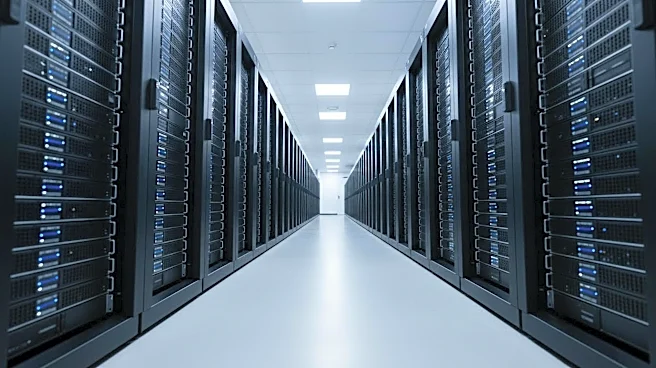
But for more complex requests that require immense computational power, the task is sent to PCC. Unlike conventional cloud AI, where your data goes to a vast, shared data center, PCC sends it to a secure system running on custom Apple silicon servers. Apple has designed this system to be a black box; data is processed ephemerally and is never stored or made accessible to anyone—not even Apple employees. This creates a powerful hybrid model that balances performance with an uncompromising stance on user privacy.
The Core Strategy: Selling Privacy as a Feature
In a world where consumers are increasingly wary of how tech giants use their data, Apple is making privacy its killer app. While competitors rely on processing vast amounts of user data in the cloud to train and run their AI models, Apple is offering a different promise: powerful intelligence without the privacy trade-off. This isn't just a philosophical stance; it's a calculated business strategy. The company is betting that users will be more willing to embrace and integrate AI into their lives if they trust that their personal context—their messages, photos, and calendars—remains private. This trust could become a significant competitive advantage, differentiating Apple's AI experience from everything else on the market.
The Link to a Hardware 'Supercycle'
This is where the strategy directly connects to Apple's bottom line. Apple Intelligence, and by extension the benefits of Private Cloud Compute, will not be available on all devices. These advanced AI features require the power of Apple's latest silicon, meaning they will be exclusive to the newest iPhones, iPads, and Macs. This creates a compelling and urgent reason for a significant portion of Apple's massive user base—over 2.5 billion active devices—to upgrade their hardware. Analysts see this as the potential catalyst for a new hardware "supercycle," a wave of upgrades that drives a massive surge in product sales. This, more than anything, is how a backend technology could come to dominate the conversation around Apple's revenue and earnings growth for quarters to come.
Challenges and Competitive Landscape
Apple's strategy is not without risk. Building and maintaining dedicated, secure server farms for PCC is an enormous and expensive undertaking. The company must also convince consumers that the new AI features are compelling enough to justify the cost of a new device. Meanwhile, competitors are not standing still. Google, Microsoft, and Samsung are all doubling down on their own AI integrations, betting that most consumers will prioritize feature-for-feature performance over Apple's specific privacy architecture. The upcoming earnings report and subsequent sales figures will provide the first real data on whether Apple's high-stakes gamble on privacy-first AI is paying off, or if the high cost of its capital-light strategy will weigh on margins.