





The AI Arms Race Is a Trap
For the past few years, the tech world has been locked in a frantic race to build the biggest, most powerful artificial intelligence. Companies like Google and OpenAI are spending billions to one-up each other, chasing marginal gains in a battle for raw
computational supremacy. Apple, characteristically, is playing a different game. Instead of building the strongest AI, its strategy is to build the most useful one. The company is betting that for most people, an AI that is 'good enough' but perfectly woven into their daily life is more valuable than a supercomputer in the cloud. This approach is a core part of Apple's DNA: let others fight over specs while it focuses on the user experience. With Apple Intelligence, the goal isn't to wow you with what a standalone chatbot can do, but to make your iPhone, Mac, and other devices smarter in a way that feels effortless and intuitive.
What Does ‘Native’ Even Mean?
The term 'native' is the key to understanding Apple's challenge. In Cupertino's world, it means more than just being pre-installed. For Apple Intelligence to feel native, it must be invisible, predictive, and deeply personal without ever feeling invasive. It’s the difference between an app you have to open and a feature that anticipates your needs. Think of how searching for photos by content already works, or how your AirPods seamlessly switch between devices. That’s the feeling Apple wants to replicate. Unlike Google's approach, which often showcases AI as a distinct, powerful tool, Apple aims to embed its intelligence directly into the operating system. The AI should surface information from your emails, calendar, and messages contextually, without you having to ask. Success means the AI fades into the background, becoming a trusted layer of the user experience, not another app to manage.
A High-Stakes Balancing Act
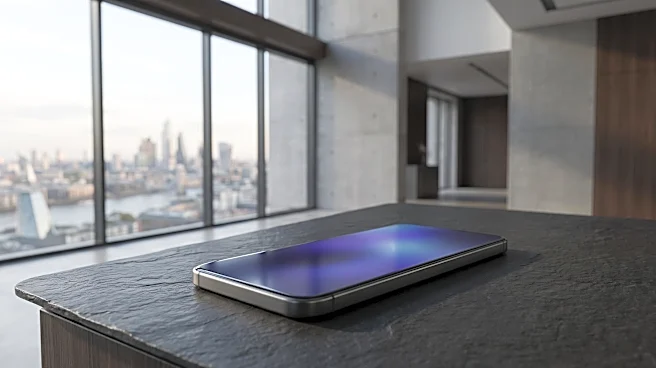
Achieving this seamless integration is a monumental task. Apple's biggest advantage is its vertical integration—it controls the hardware, software, and the custom silicon that powers it all. This allows for an emphasis on on-device processing, which is faster, more private, and a key differentiator from cloud-first rivals. However, not every complex AI task can run on a phone. This forces Apple into a delicate balancing act: perform simpler tasks on the device for speed and privacy, while sending more demanding requests to its 'Private Cloud Compute' servers. This hybrid approach is designed to offer the best of both worlds, but it also introduces complexity. Furthermore, some of the most advanced AI features are expected to require more memory, potentially being limited to the higher-end Pro models of the iPhone 18, which could fragment the very ecosystem Apple seeks to unify.
The Ghost of Siri Past
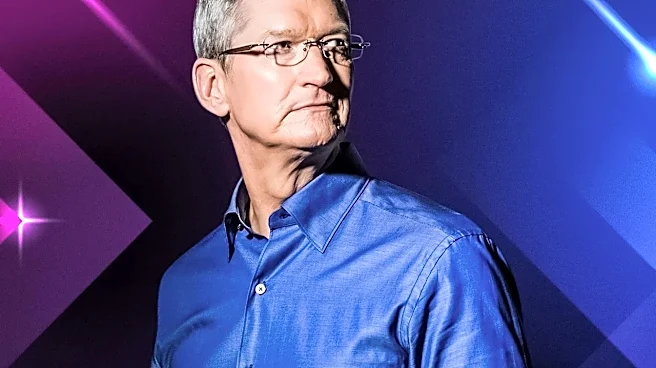
Apple doesn't have a perfect track record here, and the ghost of Siri looms large. For years, Siri has been criticized for lagging behind competitors like Google Assistant, often feeling like a bolted-on feature rather than a core part of the OS. While recent updates have improved it, the memory of its initial shortcomings serves as a cautionary tale. With Apple Intelligence, the company is essentially trying to build what Siri was always meant to be: an ambient, truly helpful assistant. The stakes for new CEO John Ternus, who recently succeeded Tim Cook, are immense. His first major launch is a referendum on whether Apple has learned from its past and can finally deliver an intelligent assistant that lives up to the company’s legendary standards for integration and simplicity. The iPhone 18's success won't be measured in megapixels, but in how natural its new intelligence feels.