
In an era where 'the cloud' feels like a wireless, magical utility, one tech giant is spending billions on the decidedly physical, messy, and expensive business of networking. Here’s why Microsoft is making
a massive bet on it.
Building a Private Internet
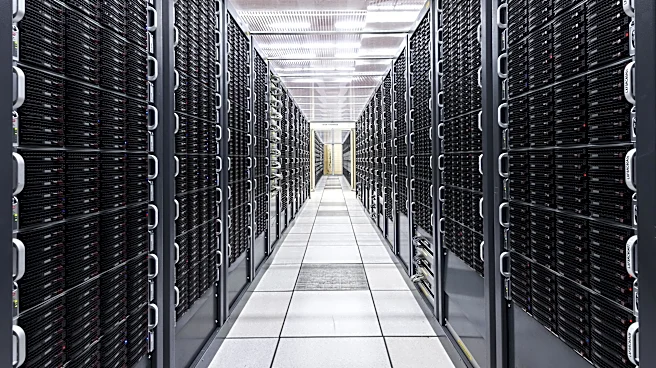
When you use a cloud service, you're relying on data traveling across the vast, shared public internet. It’s a remarkably effective system, but it’s also a chaotic digital highway shared by everyone. Microsoft decided it needed its own private, global superhighway. The company has been pouring billions into building one of the world's largest private networks. This includes laying its own subsea fiber optic cables across oceans, constructing massive data centers in dozens of countries, and even designing custom networking hardware. This isn't just about adding more servers; it's about owning the physical path that data travels globally, from a data center in Virginia to one in Singapore. This strategy ensures Microsoft's cloud services, like Azure and Microsoft 365, aren't just tenants on the public internet—they are the landlords of their own exclusive network.
The Contrarian Bet on Control
For most companies, even large tech firms, building a private global network is a non-starter. The cost is astronomical, and the complexity is immense. It's far easier and cheaper to simply lease capacity from telecommunication companies. This is what makes Microsoft's strategy a 'bet nobody else would make' at this scale. While competitors like Amazon Web Services (AWS) and Google Cloud also have formidable networks, Microsoft's aggressive investment in owning the physical fiber is a defining move. The rationale is simple: control. By owning the pipes, Microsoft isn't subject to the traffic jams, security vulnerabilities, or unpredictable costs of the public internet. It can guarantee performance, security, and latency in a way that companies relying on shared infrastructure cannot. This is especially critical for the demanding workloads of artificial intelligence and real-time enterprise services.
The Payoff: Speed, Security, and a Competitive Moat
The strategic advantages of this private network are profound. First, there's speed. Data moving between Microsoft's global data centers travels on its own optimized, uncongested routes, which means lower latency for everything from an Azure AI model to a Teams video call. Second, security is dramatically enhanced. By keeping customer data on its private network as much as possible, Microsoft reduces exposure to the threats lurking on the public internet. For enterprise and government clients with strict compliance and data residency needs, this 'sovereign-ready' infrastructure is a massive selling point. Finally, this network creates a powerful competitive moat. As AI demands more and more data to be moved quickly and reliably between data centers for training and inference, owning the network becomes a key performance differentiator. It's an advantage that is incredibly expensive and time-consuming for rivals to replicate.
The Future is Foundational
Microsoft's massive spend on infrastructure isn't just about solving today's problems; it's a foundational play for the next decade of computing. As the world moves toward more sophisticated AI,
the metaverse,
and globally distributed applications,
the network becomes as important as the processors and the software.
A company that controls its own endtoend delivery pipeline—from the silicon in its servers to the fiber at the bottom of the ocean—can innovate faster and offer a more reliable and secure product.
While the upfront investment is staggering,
Microsoft is betting that in the long run,
the companies that own the digital roads will have an insurmountable advantage.
This bet isn't just on faster cloud services;
it's on the idea that in the future,
the network is the computer.