






Beyond the Sleek Aluminum Box
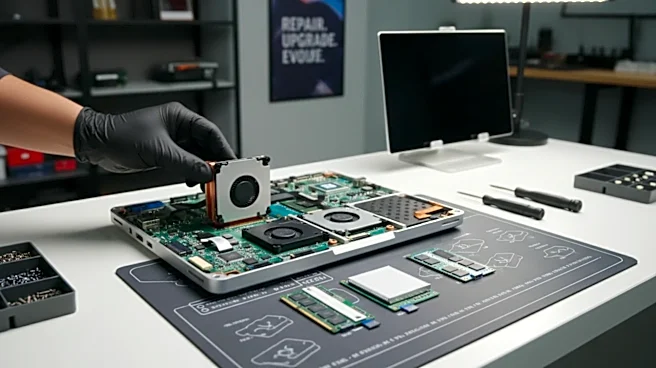
On the surface, a Framework Laptop looks like any other modern notebook: clean lines, a high-resolution screen, and a premium feel. But the magic isn't what you see; it's what you're allowed to do. Unlike the sealed, glued-shut devices that dominate the market,
every Framework computer is designed from the ground up to be opened, repaired, and upgraded by its owner. The company's core philosophy centers on longevity and user empowerment. High-use parts like the battery, keyboard, and even the screen are meant to be easily replaced with basic tools. Even the ports are modular; using a system of Expansion Cards, you can swap out a USB-A port for a USB-C, an HDMI, or a MicroSD reader in seconds, customizing the laptop for your specific needs.
A Vote Against Planned Obsolescence
The real significance of Framework isn't just in making repairs easy; it's in making them possible in the first place. The modern electronics industry has perfected the art of planned obsolescence. By soldering memory directly to the motherboard, gluing batteries into the chassis, and restricting access to parts and schematics, major manufacturers create a cycle where replacement is almost always easier and cheaper than repair. This drives constant consumption and generates massive profits, but it comes at a cost. Framework directly opposes this model. The company's most radical feature is the swappable mainboard, which allows a user to upgrade their computer's CPU to a newer generation without replacing the entire device. This transforms a laptop from a disposable gadget into a long-term investment, fundamentally changing the user's relationship with their technology.
The Right-to-Repair Revolution
Framework is the physical embodiment of the growing Right to Repair movement, a consumer-led campaign pushing for legislation that requires manufacturers to make parts, tools, and information available for independent repair. This movement aims to combat the mountains of electronic waste (e-waste) created each year. Discarded electronics are a massive environmental problem, leaching toxic materials like lead and mercury into the soil and water. By designing for longevity, Framework provides a practical solution. Every laptop that is repaired instead of discarded is a victory for sustainability. The company’s existence serves as a powerful proof-of-concept for lawmakers and a challenge to larger competitors, showing that a more ethical and sustainable business model is not just a fantasy, but a reality.
An Ecosystem, Not Just a Product
What makes Framework's approach truly revolutionary is the ecosystem it's building. The Framework Marketplace is a hub where users can buy not just official replacement parts, but also components from third-party developers and even sell their old modules to other users. This has sparked a vibrant community of tinkerers creating unique mods and custom Expansion Cards. People have built everything from custom cases for old mainboards to specialized hardware tools. This open approach stands in stark contrast to the closed, proprietary ecosystems of major tech giants. While the company is still a niche player in a market dominated by giants, its influence is growing. Other manufacturers are slowly beginning to reintroduce more repair-friendly designs, suggesting that Framework’s ideas are starting to ripple across the industry.