






The Platform, Not the Product
In the early 2000s, Microsoft's dominance wasn't just about selling copies of Windows Server. It was about making Windows Server the unquestioned platform on which businesses ran their most critical operations. It was the foundation for everything from
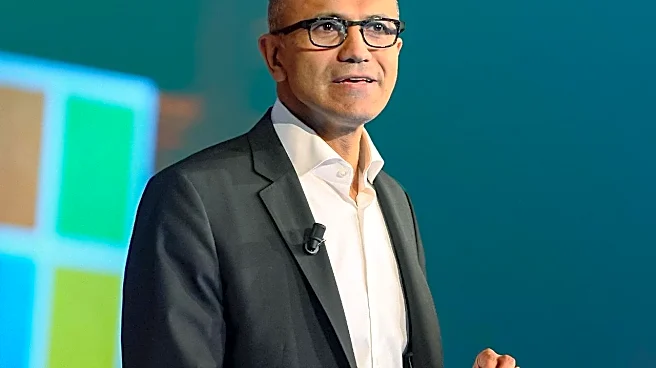
databases and email to custom internal applications. The OS itself was secondary to the ecosystem it enabled. Fast forward to today, and Microsoft is running the same play with Azure AI. The goal isn't just to offer the best individual AI model; it's to make Azure the essential, non-negotiable infrastructure where all enterprise AI development, deployment, and governance happens. As CEO Satya Nadella has emphasized, the vision is to democratize AI as a new technology platform, turning Azure into the world’s AI supercomputer. This makes the choice of a specific model less important than the choice of the underlying platform.
An Unbeatable Partner Ecosystem
Windows Server thrived because Microsoft cultivated a massive global network of developers, hardware vendors, consultants, and IT professionals who built their careers and businesses on it. This created a deep, self-perpetuating moat; even if a rival OS was technically superior on some metric, it couldn't compete with the sheer scale of the Windows Server ecosystem. Microsoft is now replicating this strategy at lightning speed for AI. Its multi-billion dollar partnership with OpenAI gave it a massive head start, making Azure the exclusive cloud provider for OpenAI's demanding workloads. But the strategy has since broadened. Azure AI now offers a 'Foundry' that includes models from multiple partners, not just OpenAI. By becoming the central, model-agnostic platform, Microsoft encourages developers and companies to build on Azure, regardless of which AI model they prefer, deepening the ecosystem lock-in.
Winning the Enterprise Relationship
Microsoft's most durable advantage has always been its deep, trusted relationship with enterprise IT departments. For decades, CIOs have built their infrastructure around Microsoft products, from Active Directory for user management to the entire Office suite. This existing integration is the secret weapon for Azure's AI push. For a Fortune 500 company already running on Microsoft 365 and Azure, adopting Microsoft's AI tools is the path of least resistance. Data is already in the ecosystem, security and compliance frameworks are familiar, and tools like Co-pilot integrate directly into the software employees use every day, such as Word, Excel, and Teams. This makes adopting Azure AI less of a risky new venture and more of a natural upgrade, a powerful advantage that competitors building from scratch cannot easily replicate.
From 'Good Enough' to the Smartest Default
A key lesson from the server wars was that the 'best' technology doesn't always win. Windows Server was often seen as a 'good enough' solution that won because of its ease of use, broad application compatibility, and deep integration. Microsoft is applying this logic to AI. While competitors may argue about whose large language model is marginally 'smarter', Microsoft is focused on making its AI the smartest default choice for business. By embedding AI across its entire product stack—from GitHub Co-pilot for developers to Microsoft 365 Co-pilot for office workers—it is making AI a utility. The value proposition isn't just the AI model itself, but the seamless integration into existing workflows. This strategy shifts the conversation from raw performance to practical, everyday productivity, a battleground where Microsoft has historically been unbeatable.