








An Ache Becomes an Industry
In the late 1980s and early 90s, the personal computer wasn't just a tool for hobbyists anymore; it was the engine of the modern office and a fixture in the home. With this boom came a widespread and painful side effect: Repetitive Strain Injury (RSI).
As millions spent their days typing on rigid, one-size-fits-all keyboards, complaints of wrist, arm, and shoulder pain skyrocketed. The problem was that the standard keyboard layout was a holdover from the typewriter era, designed for mechanical efficiency, not human comfort. This growing health crisis created a market not just for wrist rests and gel pads, but for a fundamental rethinking of the device itself. A small but dedicated group of designers and engineers saw an opportunity to solve a real, physical problem, setting the stage for a radical departure from the norm.
The First Wave of Weird
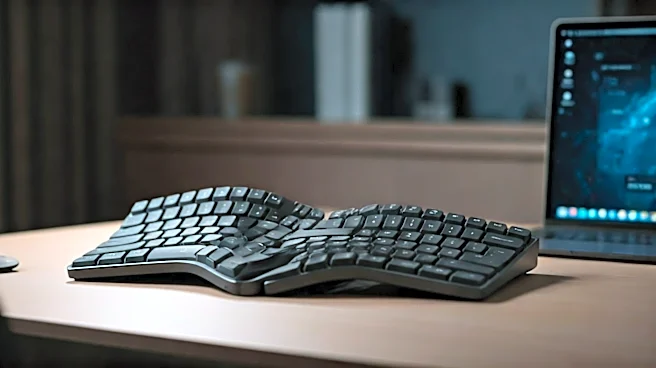
The initial solutions were anything but subtle. Keyboards like the Maltron, first developed in the 1970s, and the iconic Kinesis Advantage, with its deep concave key-wells, looked like something from a sci-fi movie set. They split the keyboard in half to align with the natural angle of the arms, arranged keys in columns (ortholinear layout) to match the straight motion of fingers, and used sculpted shapes to reduce hand movement. These weren't just keyboards; they were manifestos. They argued that the hardware should conform to the user, not the other way around. While they were expensive, niche, and required a steep learning curve, they proved a critical point: a completely different approach was possible. They built a cult following among programmers, writers, and anyone whose livelihood depended on their hands, creating a loyal customer base willing to pay a premium for a product that genuinely solved their pain.
Microsoft Makes It Mainstream
For ergonomic keyboards to truly have an impact, they needed to escape the niche. That moment came in 1994 with the launch of the Microsoft Natural Keyboard. It was a brilliant compromise. It wasn't as radical as a Kinesis, but it introduced the core ergonomic concepts—a split layout and a gentle arc—to a mass market at an affordable price. Backed by Microsoft's enormous marketing power and bundled with new PCs, it sold millions. Suddenly, a “weird” keyboard was on desks everywhere. The Natural Keyboard’s success did two things: first, it legitimized the concept of ergonomics in consumer hardware for millions of people. Second, it showed other hardware companies that there was a massive, untapped market for products designed around user comfort and health, a lesson that would later inform the design of everything from gaming mice to virtual reality controllers.
The Legacy: A User-Built Future
Today, the most interesting ergonomic keyboard developments aren't happening at major corporations, but in the open-source community. Enthusiasts and tinkerers, inspired by the pioneers, now design, share, and sell kits for highly customizable split keyboards like the ErgoDox or the Dactyl. This movement took the original ergonomic philosophy—that the tool should fit the user—to its logical conclusion. Now, users can not only choose their layout but also 3D print their own cases, program custom firmware, and select their preferred mechanical switches. This DIY spirit has created a laboratory for hardware innovation, testing ideas around modularity, user-repairability, and open-source design that are slowly influencing the broader tech industry. It proved that a small group of passionate users could create better, more personalized hardware than a billion-dollar company, a powerful idea in an age of sealed-shut devices.