

The Old Dream and a Major Hurdle
The dream of teaching a machine to create is an old one in computer science. For years, the most promising approach was a clever setup called a Generative Adversarial Network, or GAN. Introduced in 2014, GANs pit two neural networks against each other:
a 'generator' that creates images and a 'discriminator' that judges if they're real or fake. This constant competition forces the generator to get better. However, GANs were notoriously unstable. They often suffered from 'mode collapse'—where the generator gets stuck producing only a limited variety of images—and were difficult to control with precision. You might get a picture of a cat, but not necessarily the specific 'fluffy Persian cat on a velvet cushion' you asked for. This instability was a huge roadblock.
The 'Library of Everything' Problem
An AI model can't create an image of something it has never 'seen'. For a machine to understand the near-infinite combinations of objects, styles, and actions described in human language, it needs a staggering amount of visual data. Before models like Imagen could work, the field needed massive, web-scale datasets containing billions of image-and-text pairs. This wasn't just an algorithmic challenge; it was a brute-force data engineering problem. It required the internet to mature and for researchers to develop methods for scraping and cleaning colossal amounts of data, creating a digital 'library of everything' from which the AI could learn the relationship between the words "astronaut" and the visual of a person in a spacesuit.
An Unlikely Inspiration: Thermodynamics
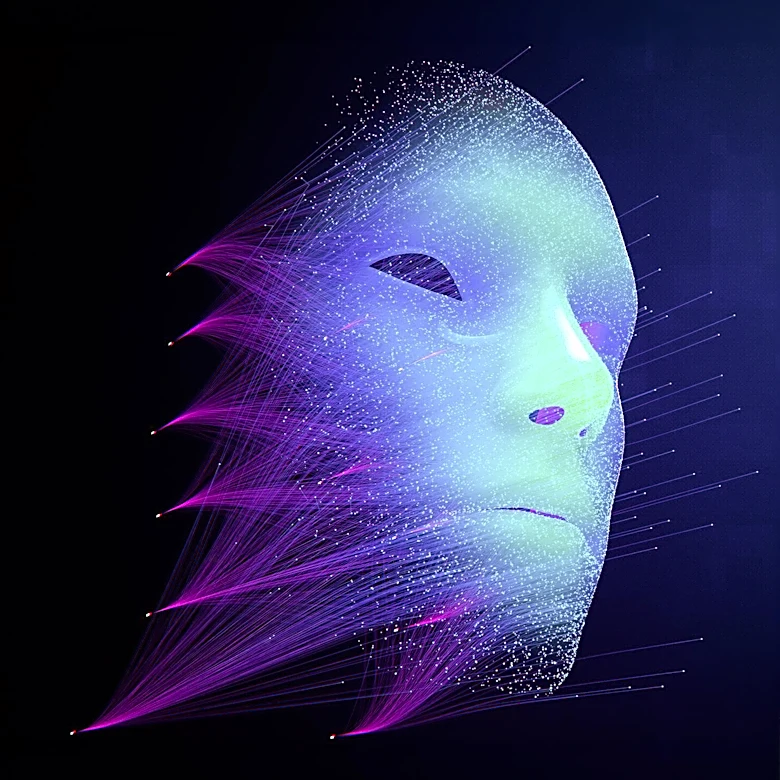
The real breakthrough came from a completely different and, frankly, less intuitive idea: diffusion. First proposed in 2015 but not made truly practical until years later, diffusion models are inspired by physics. The process works in two stages. First, you take a clear image and systematically add 'noise' (like TV static) step-by-step until it's pure chaos. Then, you train a neural network to do the exact reverse: to take a noisy image and carefully denoise it, step-by-step, until a clear picture emerges. This method proved to be far more stable and controllable than GANs. The model learns to sculpt an image out of randomness, guided by the user's text prompt. While the idea was old, it was considered too slow until key breakthroughs in the early 2020s made it computationally feasible.
The AI Had to Learn to Read, First
Creating a beautiful image is only half the battle. To be truly useful, the model has to deeply understand what you're asking for. This is where another, parallel revolution in AI became essential: Natural Language Processing (NLP). Models like Imagen rely on powerful 'transformer' language models to interpret the text prompt. Google's Imagen, for instance, uses a text encoder called T5 to translate human language into a detailed mathematical representation, or 'embedding'. This embedding captures the meaning, context, and relationships between words. Google's research found that making the language model bigger and better had a more significant impact on the final image quality and prompt accuracy than just scaling up the image generation part itself. The AI first had to become a sophisticated reader before it could become a master painter.
Assembling the Final Masterpiece
The Imagen architecture that seems so revolutionary today is really a clever assembly of these independent breakthroughs. It’s a pipeline. First, the powerful text encoder turns your words into a meaningful guide. Then, a conditional diffusion model uses that guide to generate a small, 64x64 pixel base image from noise. Finally, a series of 'super-resolution' diffusion models upscale that tiny image, adding more and more detail until it reaches a high-resolution 1024x1024 output. This cascaded approach allows the model to focus on composition and semantics first, and then on photorealistic detail. It wasn't one component that took decades to invent, but all of them. Each piece—the data, the text comprehension, and the stable generative process—had to reach maturity before they could be combined into the powerful tool we see today.