





What Is This Invisible Guardian?
At its core, elliptic curve cryptography (ECC) is a type of public-key cryptography, the same family of security that has protected digital information for decades. This method uses a pair of keys: a public key you can share with anyone, and a private
key you keep secret. Someone can use your public key to encrypt a message, but only your private key can decrypt it. The magic of ECC lies in how it creates these keys. Instead of using the cumbersome multiplication of very large prime numbers like older methods, ECC is based on the properties of a specific mathematical equation that forms an elliptic curve. Think of it less like a simple oval and more like a complex, looping line on a graph. The security of ECC comes from the difficulty of figuring out the private key even if you know the public key and the curve's equation. It's a mathematical trapdoor that's easy to use one way (creating the public key) but incredibly hard to reverse.
Smaller, Faster, Stronger: The ECC Advantage
The main reason ECC has become so widespread is its remarkable efficiency. For years, the industry standard was an algorithm called RSA. While effective, RSA requires very long keys to provide strong security. As computing power grew, RSA keys had to get even longer, which slowed things down and used more processing power. ECC changed the game. It provides the same level of security as RSA but with much smaller keys. For example, a 256-bit ECC key offers comparable security to a 3,072-bit RSA key. This efficiency is a massive advantage in the modern world. Smaller keys mean faster performance, which is crucial for the snappy response we expect from websites. It also means less battery and processor usage, making ECC the perfect security solution for resource-constrained devices like smartphones, IoT gadgets, and other mobile hardware.
Hiding in Plain Sight: Where You Use ECC Every Day
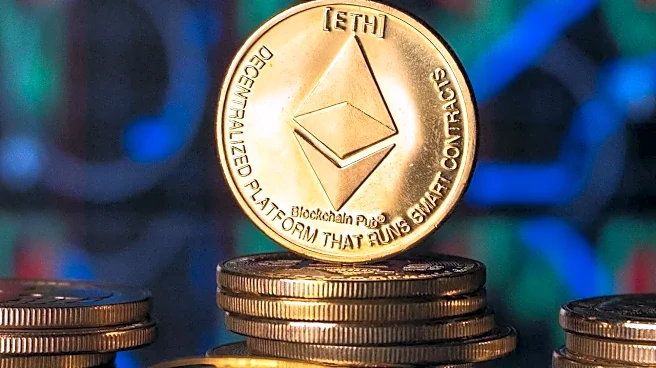
The headline's claim isn't an exaggeration; ECC is deeply embedded in the digital infrastructure you rely on. Its most common application is in the Transport Layer Security (TLS) protocol, the system that puts the 'S' in HTTPS and displays a padlock in your browser's address bar. Most modern websites use ECC to establish a secure connection between your device and their server, protecting your data in transit. Beyond web browsing, ECC is a cornerstone of secure messaging. Apps like iMessage and Signal use it to ensure that only the sender and intended recipient can read the messages. It's also fundamental to the world of cryptocurrency. Bitcoin, Ethereum, and many others use an ECC-based algorithm (specifically, ECDSA) to create digital wallets and sign transactions, guaranteeing that only the owner of the private key can access and spend their funds.
The Future of Digital Security
While ECC is the current champion of efficient public-key cryptography, the tech world never stands still. The next great challenge on the horizon is the advent of quantum computing. Quantum computers, when they become powerful enough, could theoretically break the mathematical problems that underpin both RSA and ECC. Researchers are already hard at work developing new, quantum-resistant algorithms to prepare for this future threat. However, that future is still some years away. For now, elliptic curve cryptography remains the workhorse of modern digital security. It strikes the perfect balance of strength and efficiency, allowing for robust protection without slowing down the fast-paced digital experiences we've come to expect. It's the silent, unsung hero that makes much of our online activity possible and safe.