


It’s Not Just a Simple Speed Bump
Think of the jump from 3G to 4G. It was like going from a country road to a highway; the main goal was to let more cars (data) travel much faster. This unlocked the modern app economy and mobile video streaming. The move to 5G is fundamentally different.
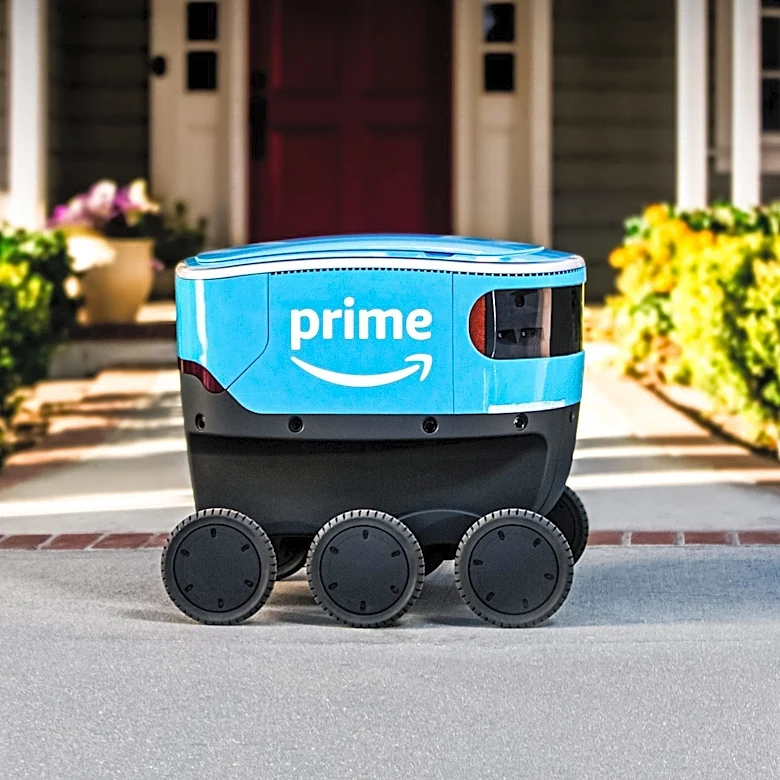
It's less like building a bigger highway and more like designing a futuristic city's entire transit system—one that needs to accommodate supersonic jets, delivery drones, and millions of tiny sensor-scooters all at once. 4G offered a one-size-fits-all service. Every device, from a smartphone to a simple sensor, got the same type of connection. Engineers realized this wouldn't work for a future filled with self-driving cars, massive sensor grids, and virtual reality. These applications have wildly different, often contradictory, needs. You can't run an autonomous vehicle on the same connection priority as a smart thermostat.
The 'Magic Triangle' of Competing Goals
The entire design of 5G revolves around serving three distinct use cases, often called the '5G service triangle'. Everything about its architecture is a direct answer to these needs. The first is Enhanced Mobile Broadband (eMBB). This is the one we're most familiar with—insanely fast data speeds for things like streaming 8K video or downloading a movie in seconds. It’s the “bigger, faster highway” part of the equation. The second is Massive Machine-Type Communications (mMTC). This is for the Internet of Things (IoT). It's designed to connect a huge number of low-power devices in a small area—up to a million per square kilometer. Think smart city sensors, agricultural monitors, or tiny trackers that need to send small bits of data while lasting for years on a single battery. The third is Ultra-Reliable Low-Latency Communications (URLLC). This is the most revolutionary. It's for mission-critical applications where lag is unacceptable, like remote surgery, autonomous vehicle coordination, or factory robotics. URLLC promises near-instantaneous response times—a delay of just a few milliseconds.
The Secret Sauce: Slicing the Network
So how do you serve three masters at once? The key innovation is a concept called 'network slicing'. This is the real architectural genius of 5G. It allows a single physical network to be divided into multiple independent virtual networks. Each 'slice' is tailor-made for one of those specific use cases. Imagine a highway system where you can create dedicated, isolated lanes on demand. One slice becomes a massive, high-speed lane for eMBB traffic (your video stream). Another slice becomes a super-secure, zero-delay lane for URLLC (a self-driving car's braking data). A third slice is optimized for mMTC, handling tiny trickles of data from millions of IoT devices without congesting the main lanes. This flexible, service-based architecture is a complete departure from 4G's rigid structure.
A Spectrum of Options for Speed and Reach
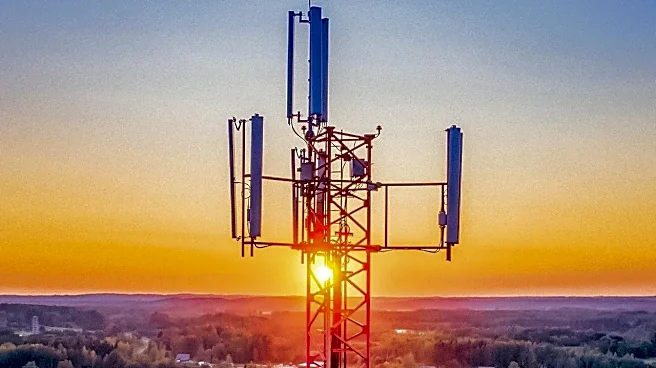
To make these slices work, 5G also uses a much wider range of radio frequencies than 4G. It’s not just one type of signal, but three. Low-band spectrum (under 1 GHz) is the workhorse; it travels long distances and penetrates buildings well, providing broad coverage like 4G does now, but with better efficiency. Mid-band spectrum (between 1 and 6 GHz) offers a sweet spot, blending good coverage with much faster speeds and higher capacity. This is where most users will experience a significant upgrade. High-band spectrum, often called millimeter wave (mmWave), is the supercharger. These frequencies are above 24 GHz and can carry enormous amounts of data at blistering speeds, but they don't travel far and are easily blocked. This makes them perfect for dense urban areas, stadiums, or specific enterprise locations. Technologies like beamforming act like a smart data spotlight, focusing the signal directly at your device to make these high-frequency connections more stable.