







AI’s Gold Rush and the Shovel Seller
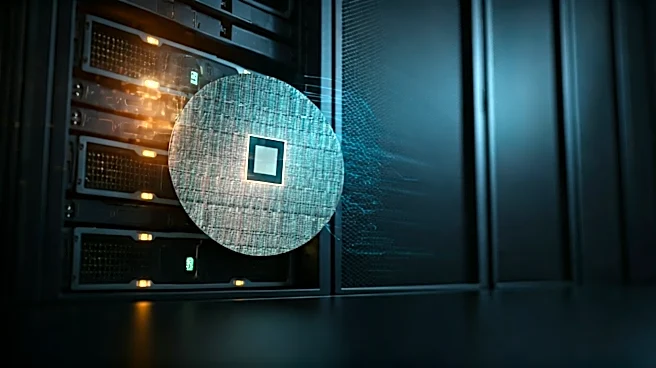
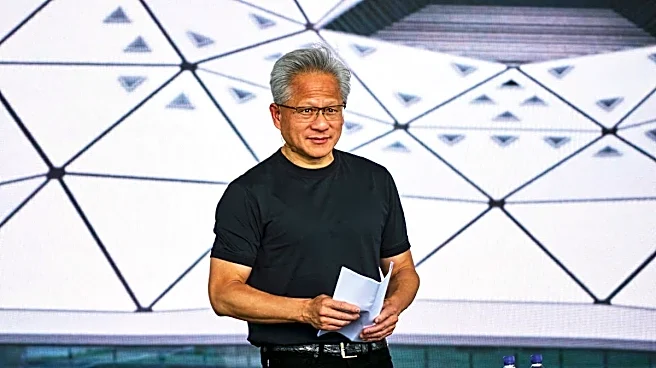
To understand the current AI landscape, picture a gold rush. Companies like OpenAI, Google, and Meta are the prospectors, all racing to find digital gold in the form of world-changing artificial intelligence. And in this rush, NVIDIA CEO Jensen Huang is the guy who owns the only store for miles that sells the picks and shovels. In this case, the tools aren’t metal; they’re graphics processing units (GPUs)—hyper-specialized chips that are uniquely good at the complex math required to train and run large AI models. NVIDIA doesn't just dominate this market; it practically *is* the market. Their CUDA software platform created a walled garden that developers have built upon for over a decade, making it nearly impossible to switch to a competitor.
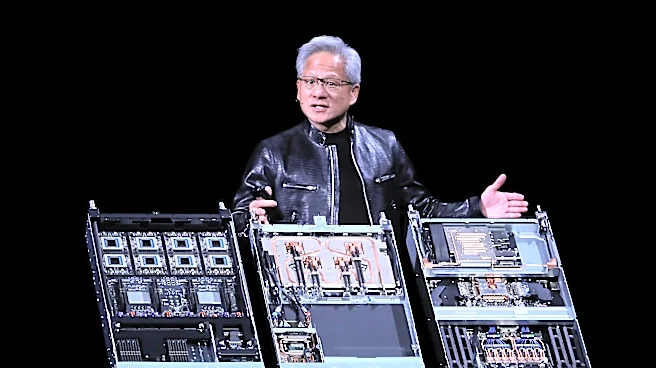
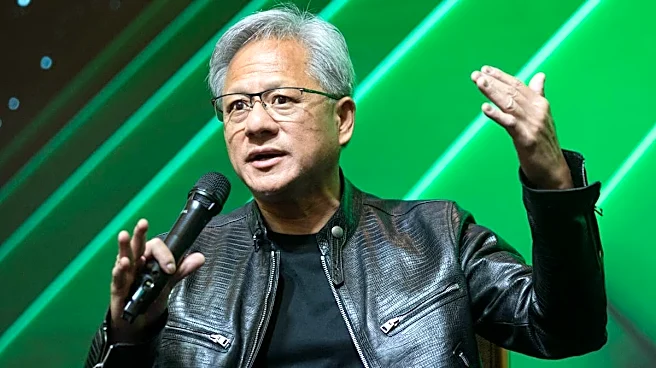
As a result, Jensen Huang has become less of a simple supplier and more of a kingmaker, whose production capacity sets the tempo for the entire industry.
The Insatiable Hunger for GPUs
OpenAI’s models, from GPT-4 to the rumored GPT-5, are not born in a flash of inspiration. They are forged in fire—the computational fire of tens of thousands of GPUs running for months on end. This training process is astronomically expensive and power-hungry. Reports suggest that training a model like GPT-4 required a massive cluster of NVIDIA’s A100 GPUs and cost upwards of $100 million. And that’s just for training. Every time a user asks ChatGPT a question, more GPUs are needed to generate the answer, a process called “inference.” OpenAI’s insatiable appetite for more powerful and more numerous chips is a direct reflection of its ambition. To build a better, faster, and more capable model, it needs more computational power. There is no software workaround for this fundamental hardware requirement.
Huang’s 'Supply Chain Reality' Check
When Jensen Huang talks about supply chain reality, he’s not just talking about making more silicon wafers. The bottleneck is far more complex. NVIDIA’s top-tier chips, like the H100 and the new Blackwell B200, are more like complete systems than simple processors. They require advanced, hard-to-produce components, particularly a technology called CoWoS (Chip-on-Wafer-on-Substrate) for packaging, which is in extremely high demand. Furthermore, these GPU systems need specialized networking equipment, massive cooling solutions, and, most critically, enormous amounts of electricity. Huang has noted that while chip supply is improving, demand continues to skyrocket. He's essentially telling the world, and his biggest customers like OpenAI, that even at full throttle, NVIDIA can’t produce enough of its highest-end systems to satisfy everyone at once. This creates a fierce, zero-sum competition for a finite resource.
The Direct Impact on OpenAI's Roadmap
So, what does this mean for the next big OpenAI update? It means the company is in a queue. OpenAI, despite being a marquee customer, is competing for the same limited pool of NVIDIA’s best Blackwell GPUs against its own partner, Microsoft, as well as rivals Google, Meta, and Amazon. This hardware constraint creates several direct consequences for Sam Altman’s company. First, it could delay the training of next-generation models like GPT-5. If you can’t get enough GPUs, you can’t start the months-long training process. Second, it could limit the scale and availability of new features. A brilliant new capability is useless if you don’t have the inference capacity to offer it to millions of users. Finally, it makes everything more expensive, potentially forcing OpenAI to pass costs to consumers or limit access to its most powerful tools. The pace of OpenAI's innovation is no longer just a matter of code; it's a matter of procurement and allocation.