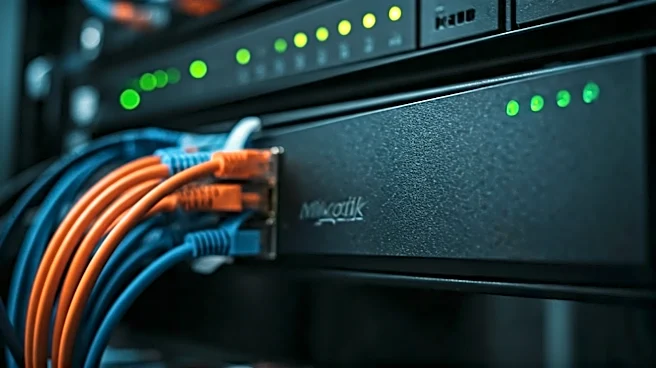








The Unsung Hero of the Internet
Before we talk certifications, let's talk about why Mikrotik matters. While names like Cisco or Juniper dominate conversations in massive enterprise data centers, Mikrotik has quietly carved out a huge, critical niche. Think of them as the champions of the practical, the cost-effective, and the endlessly customizable. Their RouterBOARD hardware, powered by the Swiss Army knife-like RouterOS software, is the lifeblood of thousands of Wireless Internet Service Providers (WISPs) that bring internet to rural America. It’s the go-to for small-to-medium businesses (SMBs) that need enterprise-grade features without the enterprise price tag. It’s also beloved by tech enthusiasts and home lab builders who want total control over their network. This combination
of affordability, power, and flexibility is why Mikrotik hardware is lurking in network closets, on antenna towers, and in server racks all across the country, quietly making modern digital life possible.
The Foundation: MTCNA
If you’re going to get just one certification, this is it. The Mikrotik Certified Network Associate (MTCNA) is the mandatory starting point for the entire certification track, and for good reason. It’s not just a rubber stamp; it’s a comprehensive boot camp for RouterOS. You’ll learn everything from the absolute basics of logging in and initial setup to more complex tasks like creating firewalls, managing wireless access points, implementing quality of service (QoS) to prioritize traffic, and setting up basic VPNs. Passing the MTCNA exam demonstrates that you have a solid, practical understanding of how to configure, manage, and perform basic troubleshooting on a Mikrotik device. For anyone looking to work with Mikrotik professionally, or even just level up their home network game, the MTCNA is non-negotiable. It’s the key that unlocks the rest of the ecosystem.
The Routing Specialist: MTCRE
Once you have your MTCNA, you can start specializing. For many, the next logical step is the Mikrotik Certified Routing Engineer (MTCRE). This certification dives deep into the world of routing, the very core of how networks talk to each other. While the MTCNA covers static routing, the MTCRE is where you learn the complex, dynamic routing protocols that power the internet and larger corporate networks. You'll get hands-on with OSPF (Open Shortest Path First), a fundamental protocol for managing routes within a single large network, and learn about connecting to other networks via BGP (Border Gateway Protocol). This certification is crucial for anyone working at an ISP, a data center, or a company with a complex, multi-site network. It signals that you can move beyond a single router and design and manage the traffic flow of an entire system.
The Wireless Guru: MTCWE
In a world drowning in Wi-Fi, being a true wireless expert is a superpower. The Mikrotik Certified Wireless Engineer (MTCWE) certification is designed to give you that power. This course goes far beyond just setting up a Wi-Fi password. It’s an advanced dive into the physics and protocols of 802.11 wireless networking. You’ll learn about spectrum analysis, how to mitigate interference, advanced security protocols for wireless, and how to properly implement and manage Mikrotik’s proprietary wireless protocols like Nstreme and NV2. This is an essential certification for anyone deploying wireless networks in challenging environments like hotels, coffee shops, outdoor venues, or dense office buildings. It proves you can design and troubleshoot a reliable, high-performance wireless network, not just plug in an access point and hope for the best.
The Security Watchdog: MTCSE
As networks grow more complex, securing them becomes paramount. The Mikrotik Certified Security Engineer (MTCSE) is arguably one of the most relevant advanced certifications today. This course focuses on securing a network from external and internal threats using RouterOS. You'll learn to master the Mikrotik firewall, attack detection, and secure tunneling protocols. Topics include advanced firewall chains, detecting and preventing common network attacks like port scanning and SYN floods, and properly implementing various VPN technologies like IPsec and L2TP. In an era of constant cyber threats, holding an MTCSE demonstrates a vital and highly sought-after skill set. It shows you can not only build a network but also defend it.