





What Exactly Is High-Bandwidth Memory?
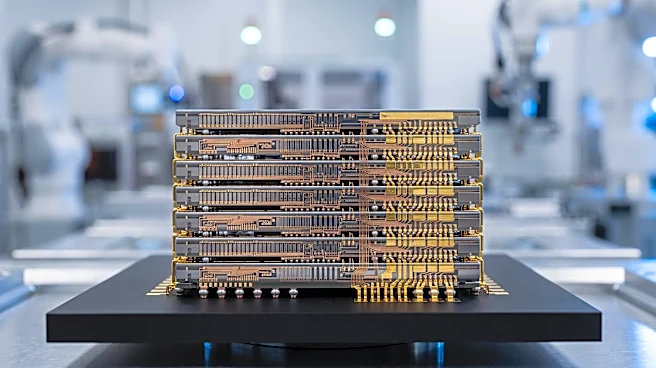
Think of a regular computer's memory (DRAM) as a single-lane road for data. It works fine for everyday tasks. High-Bandwidth Memory, or HBM, is completely different. It’s a multi-lane superhighway built right next to the processor. HBM achieves its incredible
speed by stacking memory chips vertically, like a skyscraper, and connecting them with thousands of data pathways. This architecture provides massive bandwidth, allowing a processor to access huge amounts of data almost instantly. For artificial intelligence, which involves processing enormous datasets for training and inference, this isn't just a nice-to-have; it's a fundamental requirement. Without the massive data pipeline HBM provides, even the most powerful AI accelerator would spend most of its time waiting for data, completely wasting its potential.
The AI Boom's Unquenchable Thirst
The generative AI revolution runs on Nvidia's GPUs, and those GPUs run on HBM. Each new generation of AI chip requires more, and faster, HBM to function. For example, Nvidia’s H100 GPU uses 80GB of HBM3, but its successor, the Blackwell B200, requires 192GB of the even faster HBM3e. This isn't just an incremental upgrade; it’s an exponential leap in demand. As AI models grow larger and more complex, their appetite for memory bandwidth explodes. This has transformed HBM from a high-end niche product into the single most critical component in AI hardware. The performance of a multi-billion dollar AI data center is now directly gated by the availability of these highly specialized memory stacks.
A Three-Horse Race for Supply
The entire world's supply of cutting-edge HBM is manufactured by just three companies: South Korea's SK Hynix and Samsung, and America's Micron. Producing HBM is extraordinarily difficult, requiring advanced packaging techniques to stack up to 12 individual chips with microscopic precision. Manufacturing yields are lower than for standard memory, and building new production facilities can take years. As a result, demand has completely overwhelmed supply. Reports indicate that the top HBM makers have already sold out their entire production capacity well into 2027. This creates a severe bottleneck; Nvidia can design the most advanced AI chips in the world, but it can only ship as many as it can secure HBM for.
The Direct Hit to the Bottom Line
This supply-demand imbalance has direct and significant consequences for Nvidia's earnings. Firstly, it caps revenue. No matter how many orders Nvidia has for its Blackwell accelerators, its sales are limited by the HBM supply. Secondly, it squeezes profit margins. With a limited supply and desperate buyers, HBM suppliers have immense pricing power. Nvidia's own executives have pointed to the 'extreme pricing conditions in memory' as a reason for pressure on its gross margins, which are guided to dip from 75% to as low as 71%. To combat this, Nvidia has been forced into making massive, long-term financial commitments, reportedly totaling hundreds of billions of dollars, to lock in future HBM supply from partners like SK Hynix. This strategy secures the vital components but also introduces considerable financial risk, tying up vast amounts of capital in procurement deals.