





A Radical Shift in Strategy
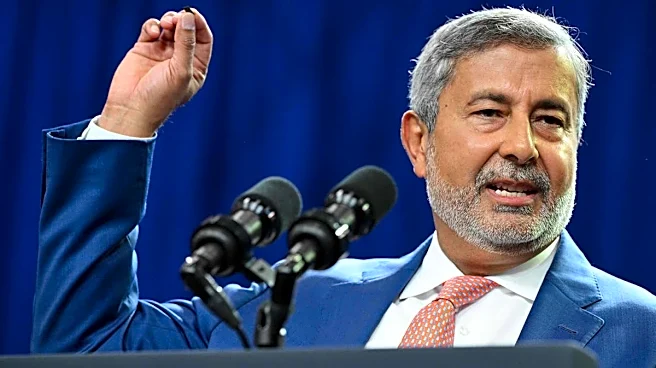
For most of its life, Lyft, like its larger rival, operated on a simple mantra: grow at all costs. The goal was to conquer cities, sign up drivers, and win riders, with profitability being a vague, distant destination. That all changed in April 2023 with the arrival of new CEO David Risher. An Amazon veteran, Risher brought a radically different, almost boring, philosophy: customer obsession and profitable growth. Instead of burning cash to chase market share points, the new focus became operational efficiency. The company cut corporate staff, reduced fixed costs, and reoriented its entire culture around a single question: will this make the business stronger and more sustainable? This shift from a blitzscaling tech startup to a disciplined
operational company is the foundation of its new moat.
The Under-the-Radar B2B Engine
While most people think of Lyft as a service you use to get to a bar or the airport, one of its strongest and most overlooked assets is Lyft Business. This is the company’s B2B arm, which provides transportation solutions for thousands of organizations. This includes corporate travel programs, patient transport for healthcare systems, and commuter benefits for employees. Why is this a moat? Because B2B contracts are sticky. They represent reliable, recurring revenue that is far less volatile than the consumer market. While an individual might switch to Uber for a $2 discount, a hospital system with an integrated Lyft transport program is not going to change on a whim. This creates a high-margin, predictable cash flow stream that insulates Lyft from the brutal price wars of the consumer-facing market.
Building Loyalty Beyond Price
Lyft realized it could never outspend Uber, so it had to be smarter. Part of that strategy involved building features that create genuine loyalty. A prime example is the Women+ Connect feature, which allows women and non-binary drivers to prioritize picking up riders of the same group. This isn’t just a PR move; it’s a powerful driver and rider acquisition and retention tool that addresses a real-world safety concern. On top of that, the company has quietly built Lyft Media, an advertising platform that lets brands reach riders during their journey. This turns idle screen time inside the car into a new revenue stream that has nothing to do with fares. These initiatives diversify revenue and create a stickier ecosystem that makes both drivers and riders less likely to switch purely based on price.
The Proof Is in the Profits
For years, Wall Street analysts were rightfully skeptical of Lyft’s path to profitability. The company was notorious for its cash burn. But Risher’s disciplined approach began to bear fruit much faster than anticipated. In 2023, Lyft generated positive free cash flow for the full year for the first time in its history—a major milestone that signaled the business model was finally working. The company followed this up with strong guidance for 2024, projecting continued free cash flow positivity. This performance caught many analysts by surprise. They were so focused on the headline-grabbing market share battle with Uber that they missed the crucial underlying improvements in Lyft’s unit economics and operational discipline. The stock, long an underperformer, began to react as the market realized Lyft had built not a fortress, but a lean, efficient, and defensible business.