





The Cost of Dominance
For the past few years, if you wanted to play in the big leagues of artificial intelligence, you had to pay the Nvidia tax. Their GPUs have become the gold standard, the essential building blocks for training massive language models. But being a customer
of a single provider comes with a massive price tag. As demand for AI skyrocketed, so did the cost of the hardware required to power it. For companies like Amazon, which is projected to spend roughly $220 billion in capital expenditures this year, relying solely on one vendor is becoming an expensive bottleneck. By designing their own chips, these companies aren't just looking for a discount; they are looking for control over their own destiny.
Customization Over Commodity
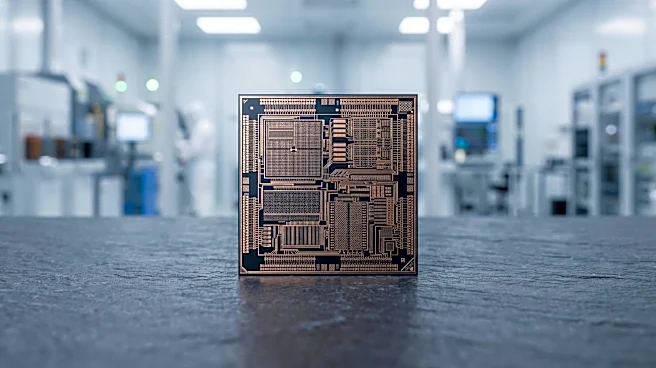
Nvidia makes incredible general-purpose chips. They are designed to do almost anything related to high-end computing, which makes them incredibly versatile but also somewhat inefficient for specific, repetitive tasks. This is where custom silicon, or ASICs (Application-Specific Integrated Circuits), comes in. When Google or Amazon designs a chip specifically for their own proprietary software and data center architectures, they can strip away everything unnecessary. This results in chips that are often more power-efficient and faster at specific AI workloads than a one-size-fits-all solution. It is the difference between buying a high-end SUV that can go anywhere and building a custom Formula 1 car designed to do exactly one thing: go fast on a specific track.
The Vertical Integration Play
Building your own chips is about more than just saving money on hardware; it is about vertical integration. In the tech world, the closer you are to the hardware, the more control you have over your entire stack—from the software running the AI to the physical servers in the data center. Amazon's Trainium and Graviton chips are prime examples of this strategy. By integrating these chips directly into their AWS infrastructure, they can offer customers specialized performance that is tightly coupled with Amazon's cloud services. This creates a 'sticky' ecosystem where customers might choose AWS not just for its scale, but because its custom hardware provides a unique performance advantage that competitors can't easily replicate.
Can Nvidia Survive the Pivot?
This shift raises a massive question: Is Nvidia's reign coming to an end? Not necessarily. Even Amazon CEO Andy Jassy has noted that Nvidia's business remains incredibly strong and that many customers will continue to demand Nvidia chips for years to come. The current reality is not a zero-sum game; it is an expansion of capacity. The demand for AI compute is growing so fast that there is enough room for both Nvidia's powerhouse GPUs and the custom silicon being developed by Big Tech. However, the tension will become much more apparent when the massive wave of capital spending eventually slows down. When companies stop building new data centers at record speeds, every chip designed by Google or Amazon will represent a direct loss for Nvidia.