



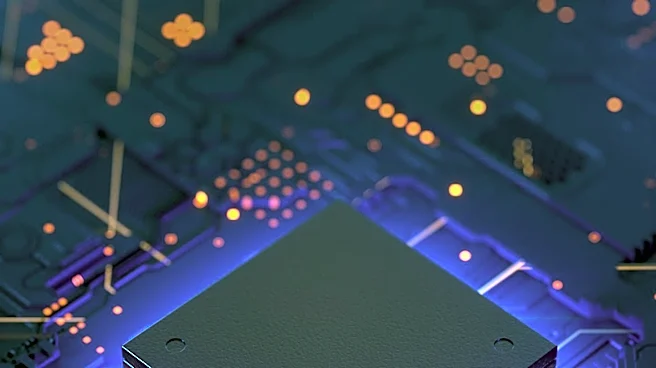
It Starts with a Purpose-Built Chip
A single TPU chip is powerful, but modern AI requires more. The first step in scaling up is mounting multiple TPU chips onto a single board. Typically, four TPU chips are placed on one board, along with their own host CPU and high-bandwidth memory (HBM)
that acts like a private reservoir of data for the chips. These boards are the building blocks. They are then slotted into custom server racks, which look like tall, black, metal cabinets you’d see in any data center. But what’s inside is far from standard. These racks are designed for extreme density, packing dozens of TPU chips into a single cabinet. This physical proximity is the first key to turning individual processors into a cohesive supercomputer.
From Chip to Board to Rack
A single TPU chip is powerful, but modern AI requires more. The first step in scaling up is mounting multiple TPU chips onto a single board. Typically, four TPU chips are placed on one board, along with their own host CPU and high-bandwidth memory (HBM) that acts like a private reservoir of data for the chips. These boards are the building blocks. They are then slotted into custom server racks, which look like tall, black, metal cabinets you’d see in any data center. But what’s inside is far from standard. These racks are designed for extreme density, packing dozens of TPU chips into a single cabinet. This physical proximity is the first key to turning individual processors into a cohesive supercomputer.
The Secret Sauce: A High-Speed Network
Here's where it gets really interesting. The magic of a TPU production system isn't just having a lot of chips; it's how they talk to each other. Instead of using standard data center networking like Ethernet, TPUs in a large cluster are connected by a custom, ultra-fast network called the Inter-Chip Interconnect (ICI). Think of it as a private highway system just for the TPUs. This network connects every chip to its neighbors in a 3D torus, or donut-like, shape. This allows any chip to send huge amounts of data to any other chip with incredibly low delay. More advanced systems use optical circuit switches (OCS), which use mirrors and light to physically reconfigure the network on the fly, creating direct paths between groups of chips for maximum speed. This custom network is what allows thousands of individual chips to act as one giant, unified computer.
Keeping It All Cool
Thousands of powerful chips packed tightly together generate an astronomical amount of heat. Traditional air conditioning, which involves blowing cold air over servers, simply can't keep up. Since as early as 2018, Google has been using direct liquid cooling for its TPUs. Inside the racks, you won't just see circuit boards and wires, but a complex web of thin tubes. These tubes carry chilled fluid directly to a metal 'cold plate' that sits on top of each TPU chip, drawing heat away with incredible efficiency. This liquid cooling is about 4,000 times more effective at transferring heat than air and allows Google to pack its TPUs much more densely. Entire racks are serviced by Coolant Distribution Units (CDUs) that manage the flow of this liquid, a system more akin to a high-performance car engine than a typical computer.
The Final Form: The TPU Superpod
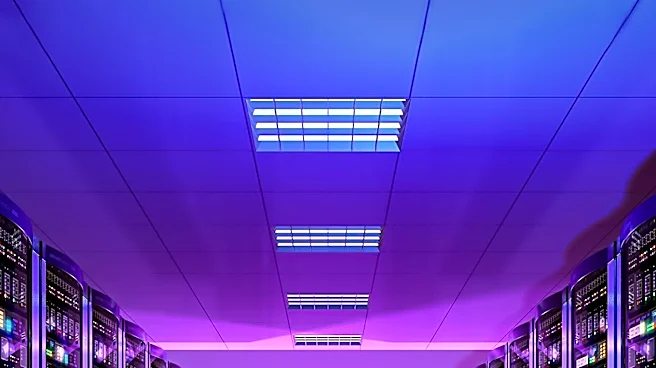
When you put it all together—the racks of liquid-cooled TPU boards all linked by a lightning-fast custom optical network—you get a TPU Pod or Superpod. This isn't just a room full of computers; it's a single, modular AI supercomputer. A modern TPU superpod can link over 8,000 or even 9,000 chips, offering exaflops of computing power—that's quintillions of calculations per second. From the outside, it's a series of sleek, humming server cabinets, often with visible tubing and a distinct lack of roaring fans. Inside, it's a precisely orchestrated dance of computation, networking, and thermal management, all working to train and run the largest and most complex AI models on the planet.