





The AI World Before the Hub
Just a few years ago, the field of advanced AI felt like a walled garden. Groundbreaking machine learning models were being built, but they were largely siloed inside the well-funded research labs of tech behemoths. For a startup, an independent researcher,
or even a developer at a smaller company, getting your hands on a state-of-the-art model was a Herculean task. The process was fragmented and inefficient; you had to scour academic papers, navigate complex code repositories, and hope you could successfully implement the model without extensive support. This friction slowed down innovation and kept the most powerful tools in the hands of a select few. The AI revolution was happening, but most people weren't invited to the party.
From Chatbot to Central Hub
Hugging Face, founded in 2016, didn't initially set out to solve this problem. Its first product was a chatbot app aimed at entertaining teenagers. But the founders—Clément Delangue, Julien Chaumond, and Thomas Wolf—soon realized the technology powering their app was far more valuable than the app itself. This led to their pivotal strategic decision: they pivoted. Instead of building a closed consumer product, they decided to build an open platform. They open-sourced their work, creating the "Transformers" library, a tool that made it stunningly simple for any developer to download, use, and fine-tune powerful AI models. This was the single move. It wasn't a new algorithm or a breakthrough in chip design; it was a radical bet on accessibility and community.
Becoming the 'GitHub of AI'
The Transformers library was the spark, but the Hugging Face Hub, launched in 2020, was the explosion. The Hub became a central repository where anyone could upload, download, and collaborate on AI models and datasets. It functioned as a "GitHub for machine learning," creating a standardized, user-friendly nexus for the entire community. The strategy was genius in its simplicity: by giving away the core tools for free, Hugging Face didn't need to create the best models themselves. They just needed to be the best place to find all the models. This created a powerful network effect. The more developers and researchers who used the Hub, the more models were uploaded, which in turn attracted more users. They became the default starting point for virtually any AI project.
The Business of Being Open
Giving everything away for free doesn't sound like a recipe for a multi-billion-dollar valuation, but it was the foundation of Hugging Face's commercial success. Their open-core model works like this: the vast, vibrant community using the free platform acts as a massive funnel. While students, hobbyists, and researchers use the public Hub, large corporations need more. They require security, dedicated support, and private, managed infrastructure to run these models in a production environment. Hugging Face monetizes by selling these enterprise-grade features, offering private hubs and paid computing services that make it easy for businesses to deploy the very models they discovered on the free platform. This allows them to fund their open-source mission while building a lucrative business on top of it.
The Ultimate Validation
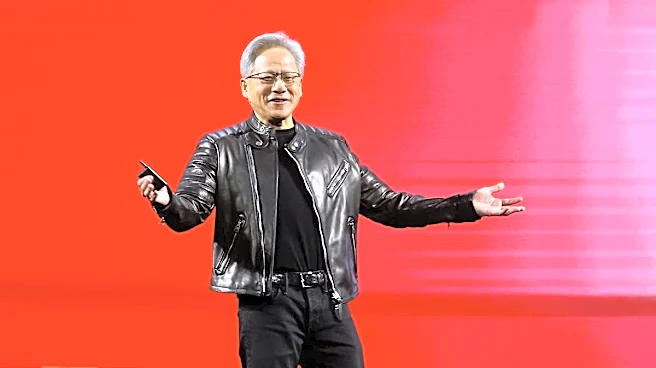
By becoming the neutral, central platform for open-source AI, Hugging Face made itself indispensable. It democratized access to cutting-edge technology, accelerating innovation for everyone from solo developers to university labs. This strategic positioning did not go unnoticed. In late August 2026, reports surfaced that chip-making titan Nvidia had reached an agreement to acquire Hugging Face for a staggering sum. The move, while raising questions about the platform's future neutrality, serves as the ultimate validation of its strategy. Hugging Face became so critical to the AI ecosystem—so completely intertwined with how modern AI is built and shared—that the industry's most dominant hardware player saw owning it as a vital strategic imperative.